
Set a Realistic Budget Before You Browse
The single most common mistake first-time buyers make is starting with a car they like and working backward to justify the cost. Flip that. Start with what you can genuinely afford, then find a car that fits.
A widely used guideline suggests keeping total monthly car costs - payment, insurance, fuel, and maintenance - under 15-20% of your take-home pay. If you haven't built a personal budget yet, our step-by-step budgeting guide walks you through the process before you spend a dollar on a car.
Purchase price is only part of the picture. Registration fees, state sales tax, insurance premiums, and ongoing maintenance costs can add hundreds of dollars per month on top of your loan payment. Our article on costs first-time buyers overlook covers each of these line items in detail.
Use the 20/4/10 Rule as a Starting Point
A common framework for car affordability: put at least 20% down, finance for no more than 4 years, and keep total vehicle expenses under 10% of gross monthly income. It's a rough guideline, not a guarantee - adjust based on your full financial picture and consult a financial adviser if you're unsure.
Decide: New, Used, or Certified Pre-Owned?
Each category comes with real trade-offs - there is no universally right answer.
- New vehicles carry full manufacturer warranties, the latest safety technology, and no ownership history to worry about. They also depreciate fastest, losing a significant portion of value in the first few years.
- Used vehicles cost less upfront and have already absorbed most of their depreciation. The risk is unknown history - which is why an independent inspection matters so much.
- Certified Pre-Owned (CPO) vehicles are manufacturer-inspected used cars that come with an extended warranty. They typically cost more than comparable non-CPO used cars but less than new, making them a popular middle ground for first-time buyers.
For most first-time buyers on a tighter budget, a reliable used vehicle or CPO option in the two-to-five-year-old range often delivers the best balance of cost and dependability.
~20%
Average first-year depreciation on a new car
Widely cited industry estimates suggest new vehicles can lose around 15-20% of their value in the first year, making used and CPO vehicles attractive for budget-conscious buyers.
Under $150
Typical cost of a pre-purchase inspection
An independent mechanic's inspection generally costs well under $150 and can identify mechanical issues before they become your responsibility.
Research and Narrow Your Options
Once you know your budget and vehicle category, research narrows the field. Focus on three factors: reliability records, total cost of ownership, and features that match your actual driving needs.
Reputable sources for reliability data include Consumer Reports and J.D. Power, both of which publish vehicle dependability studies. The National Highway Traffic Safety Administration (NHTSA) and the Insurance Institute for Highway Safety (IIHS) publish crash-test ratings you can search by make and model - safety ratings are worth checking before any purchase.
Think honestly about how you'll use the car. A compact sedan costs significantly less to insure and fuel than a midsize SUV, but if you regularly haul equipment or drive in heavy snow, a larger vehicle may be the practical choice. Match the car to your life, not to an aspiration.
Once you have two or three candidates, check our guide on preparation steps for buyers - these habits, done in the weeks before you shop, put you in a noticeably stronger position.
Search inventory online before visiting any dealership, and note the specific stock numbers of vehicles you want to see. This signals to staff that you've done your homework and aren't browsing casually.
Salespeople adapt their approach based on how prepared a buyer appears. Arriving with specific information shifts the dynamic in the buyer's favor.
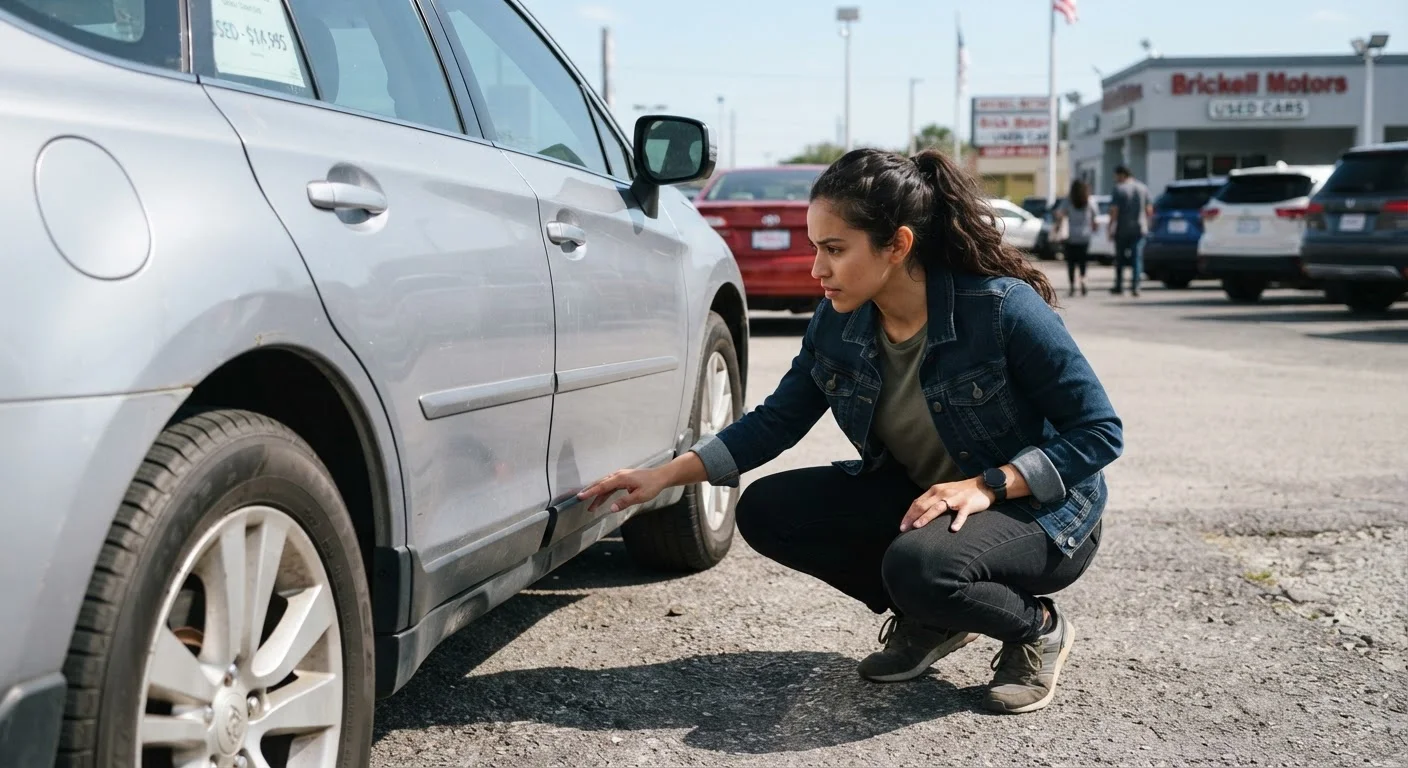
If a dealer is reluctant to let you take a used vehicle to an independent mechanic, treat that reluctance as a red flag and walk away.
A seller confident in the vehicle's condition should have no objection to an independent inspection. Resistance is often a signal that something is being concealed.
Arrange Financing Before You Step on the Lot
Walking into a dealership without pre-approved financing is like negotiating with one hand tied behind your back. Get a loan offer from your bank or a credit union first. This does two things: it tells you exactly what interest rate the market will give you, and it gives you a number to beat if the dealership offers their own financing.
Your credit score is the primary driver of the interest rate you'll qualify for. If your score is lower than you'd like, even a few months of on-time payments and lower credit card balances can move it meaningfully before you apply.
Dealer Financing Isn't Always the Best Rate
Dealerships sometimes mark up the interest rate offered by their lending partners - this markup is legal and is how the F&I office earns revenue. Having a pre-approved offer from your own bank or credit union gives you a concrete benchmark and may save you a meaningful amount in total interest over the life of the loan. Always compare the APR, not just the monthly payment.
When comparing loan offers, focus on the annual percentage rate (APR) and the total amount repaid over the loan term - not just the monthly payment. A longer loan term lowers monthly payments but increases total interest paid.
Test Drive, Inspect, and Ask the Right Questions
A test drive should last at least 20-30 minutes and include highway speeds, city stop-and-go, and a parking maneuver. Notice: how the brakes feel, whether the steering is responsive, any unusual sounds, and visibility from the driver's seat.
For any used vehicle, a pre-purchase inspection by an independent mechanic - not the dealer's shop - is one of the most valuable steps a buyer can take. Most mechanics charge under $150 for this service, and it can surface thousands of dollars in hidden issues.
Ask the seller for the vehicle identification number (VIN) and run a vehicle history report through a service such as Carfax or AutoCheck before you make any commitments. These reports show accident history, title status, and odometer readings over time.
Never Skip the Vehicle History Report
Salvage titles, flood damage, and odometer rollbacks are real risks in the used-car market and may not be visible during a visual inspection. A vehicle history report costs around $20-$40 and can reveal problems that would cost far more to fix. Treat it as a non-negotiable step, not an optional extra.
Negotiate, Review Paperwork, and Drive Away
Negotiation starts with knowing market value. Sites like Kelley Blue Book and Edmunds publish fair market price ranges by make, model, year, mileage, and condition - use these as your anchor, not the sticker price.
Keep negotiations focused on the out-the-door price (the total you pay including taxes and fees), not just the monthly payment. Dealers can make an unfavorable total look manageable by stretching the loan term.
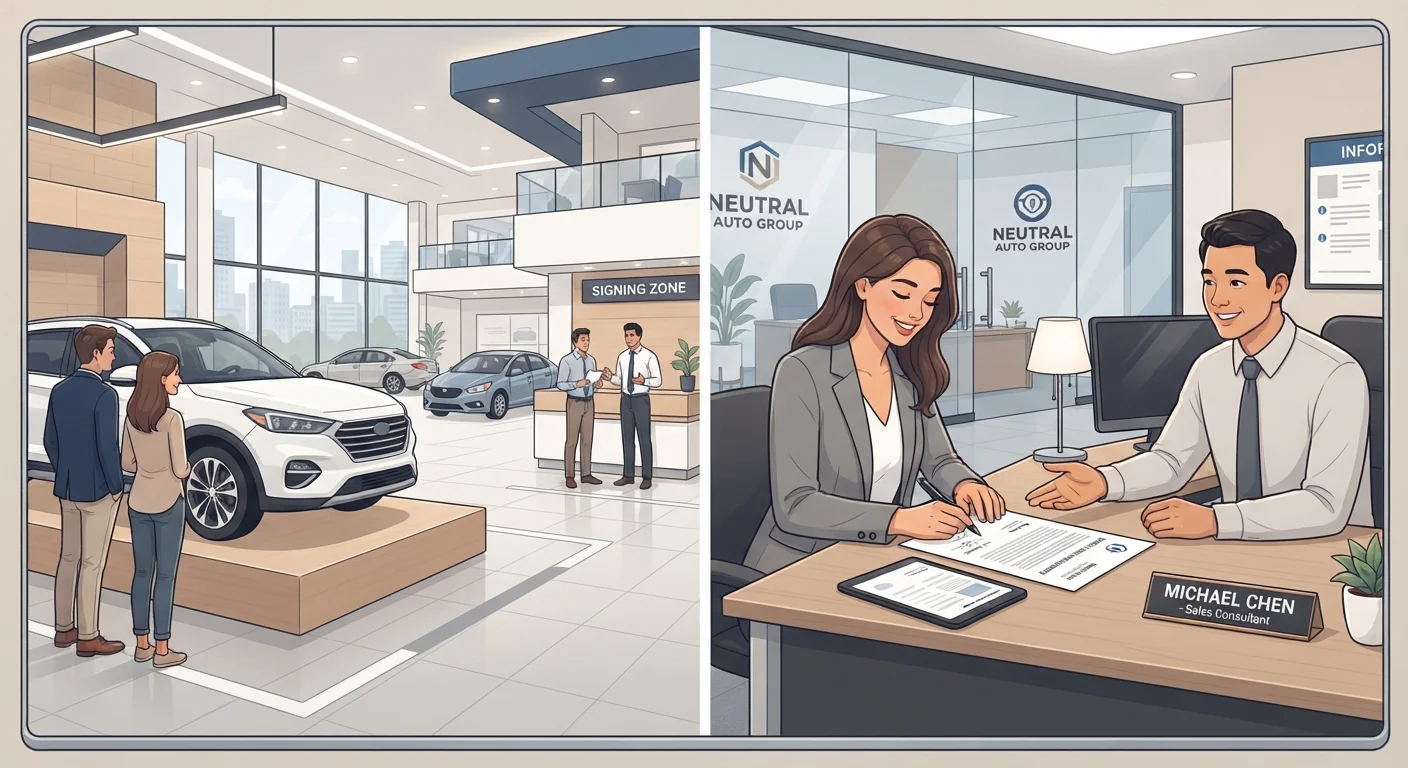
In the finance and insurance (F&I) office, you will likely be offered add-ons: extended warranties, paint protection, gap insurance, and others. Each of these is negotiable, and many can be declined or purchased later elsewhere. Read every document before signing and ask for clarification on any term you don't understand - you are entitled to take your time.
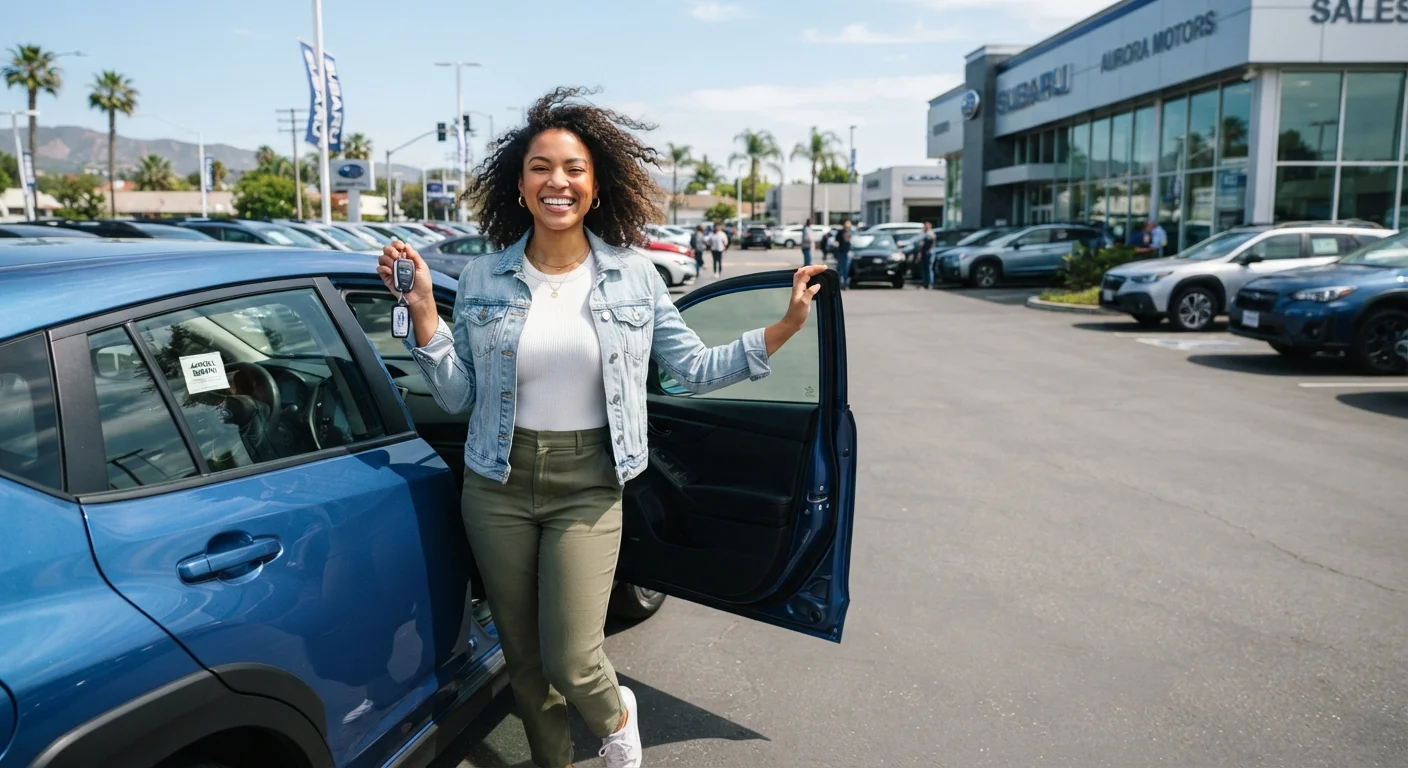
Once the paperwork is signed, confirm you have the title transfer documentation, a bill of sale, and proof of insurance before you drive off. Insurance must be active before the car leaves the lot - check with your provider in advance.
This article provides general educational information about the car-buying process and does not constitute financial, legal, or insurance advice. Costs, terms, and regulations vary by state and individual circumstance. Consult a licensed professional for guidance specific to your situation.