
Why This Jargon Matters Before You Sign
Walking into a dealership for the first time can feel like entering a conversation held entirely in code. Terms like APR, MSRP, and invoice price get thrown around casually, but each one carries real financial weight. Misunderstanding even one of them can affect how much you pay over the life of your loan or whether you leave with a fair deal.
This reference breaks each term down in plain language so you know exactly what you're looking at - whether it's on the sticker in the window, a financing contract, or a dealer's verbal offer. For a deeper look at how loan structures work, see our guide to how auto financing actually works.
| MSRP Meaning | Manufacturer's Suggested Retail Price - the recommended sale price on the window sticker |
| Invoice Price | What the dealer paid the manufacturer - not necessarily their actual net cost |
| APR | Annual Percentage Rate - yearly borrowing cost including interest and certain fees |
| Out-the-Door Price | Total cost including taxes, title, registration, and dealer fees |
| Negotiable Starting Point | MSRP - dealers can sell above or below depending on demand |
| APR Influence Factors | Credit history, loan term length, and lender choice |
The Core Terms Defined
These are the three terms you'll encounter most often, and they each describe something different about price and cost.
MSRP - Manufacturer's Suggested Retail Price
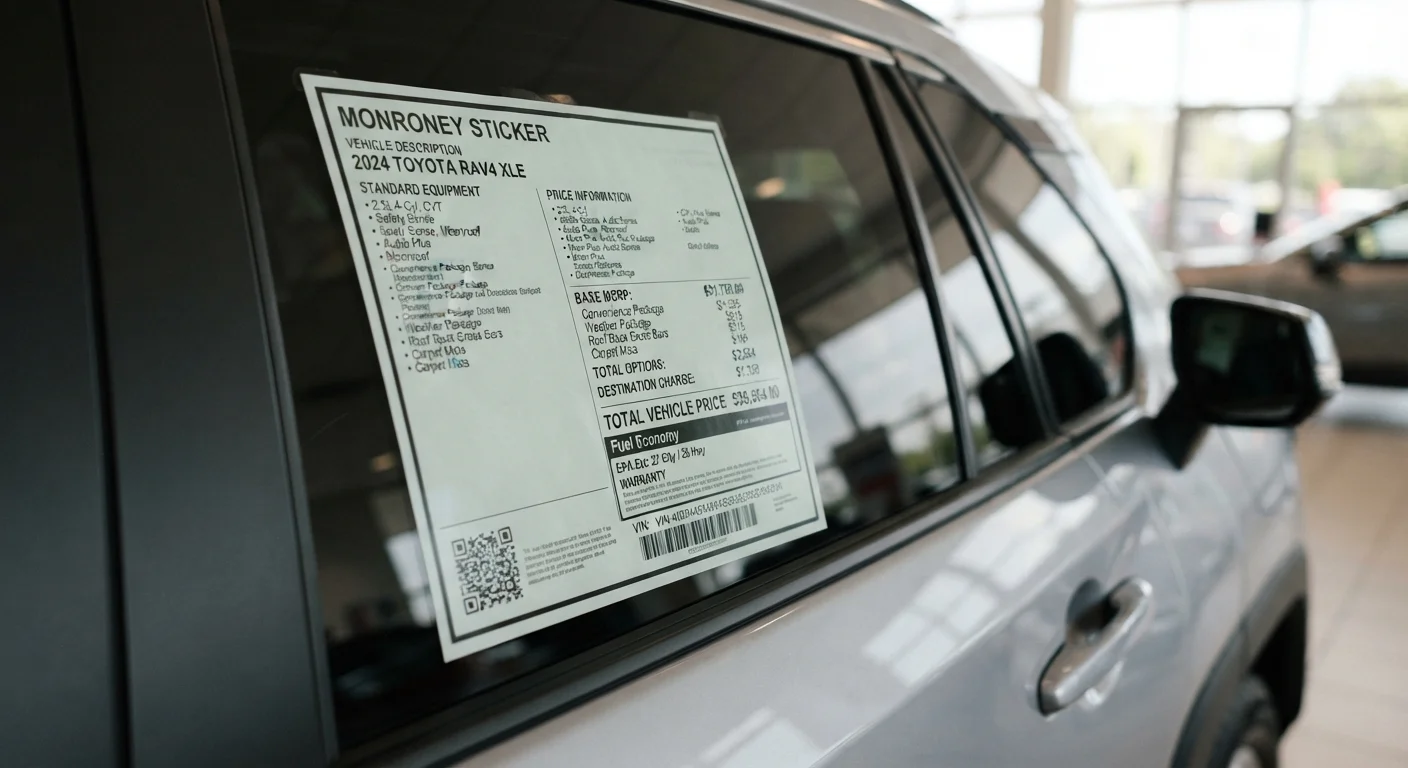
MSRP is the price the vehicle manufacturer recommends the dealer charge. It's printed on the Monroney label (the window sticker required by federal law) and is often called the sticker price. It covers the base vehicle plus any factory-installed options. "Suggested" is the operative word - it is not a fixed price. Dealers can sell above or below MSRP depending on supply, demand, and the vehicle's popularity.
Invoice Price
The invoice price is what the manufacturer charges the dealer for the vehicle. It's often presented in negotiations as the dealer's actual cost, implying there's little room to discount below it. In practice, dealers frequently receive manufacturer incentives, holdbacks, and bonuses that reduce what they actually paid - so invoice price is a useful reference point, not the dealer's floor. Understanding this distinction helps when evaluating offers.
APR - Annual Percentage Rate
APR is the yearly cost of borrowing money, expressed as a percentage. When you finance a car, APR determines how much interest you pay on top of the loan principal. A lower APR means less total interest over the life of the loan. APR includes the interest rate and, in some cases, certain lender fees - making it a more complete measure of borrowing cost than the interest rate alone. Your APR will vary based on your credit history, loan term, and the lender. See how financing through a dealership compares to your own bank to understand how lender choice affects your rate.
MSRP
Manufacturer's Suggested Retail Price - the recommended selling price set by the vehicle's manufacturer and displayed on the window sticker. It is a starting point for negotiation, not a fixed price.
Invoice Price
The price a dealer pays the manufacturer for a vehicle. Often used as a negotiating reference, though dealers may receive additional incentives that lower their true cost below this figure.
APR
Annual Percentage Rate - the yearly cost of a loan expressed as a percentage. It includes the interest rate and potentially certain fees, making it the most accurate measure of what borrowing will cost you.
Out-the-Door Price
The total final amount you pay to complete the vehicle purchase, including taxes, title, registration, and dealer fees. Always request this figure in writing before agreeing to a deal.
Holdback
A percentage of the MSRP or invoice price that a manufacturer pays back to the dealer after a sale. It means dealers often profit even when selling at or near invoice price.
Monroney Label
The federally required window sticker on new vehicles listing MSRP, standard features, optional packages, fuel economy ratings, and safety data.
Other Terms Worth Knowing
Beyond the big three, several other terms appear regularly during the buying process.
Always Ask for the Out-the-Door Price
Monthly payment figures can obscure the true cost of a vehicle by spreading fees across a long loan term. Before focusing on what you'll pay per month, ask the dealer for the full out-the-door price in writing. This single number makes it much easier to compare offers accurately and spot fees you weren't expecting.
Out-the-Door Price
This is the total you'll actually pay to drive the car off the lot - including taxes, title, registration fees, and any dealer fees. Always ask for the out-the-door price in writing before agreeing to anything. The MSRP alone does not reflect this number.
Dealer Add-Ons
These are products or services the dealer installs or offers after the factory build - things like window tinting, fabric protection, or alarm systems. They're often added to the vehicle price without much explanation. You generally have the right to decline them, though some dealers present them as non-negotiable.
Trade-In Value vs. Market Value
If you're trading in an existing vehicle, the dealer will assess its trade-in value - typically lower than what you could get by selling it privately. Market value is what a buyer would pay on the open market. Knowing both figures before you arrive gives you a clearer picture of the deal structure. Our article on costs first-time buyers often overlook covers how these decisions ripple through your overall budget.
Once you understand these terms, you'll also be better prepared to challenge assumptions at the negotiating table. Our piece on common myths about negotiating at a dealership addresses what's actually up for discussion - and what isn't.
This article is for general informational and educational purposes only. It does not constitute financial, legal, or purchasing advice. Consult a qualified financial adviser or licensed professional for guidance specific to your situation.