

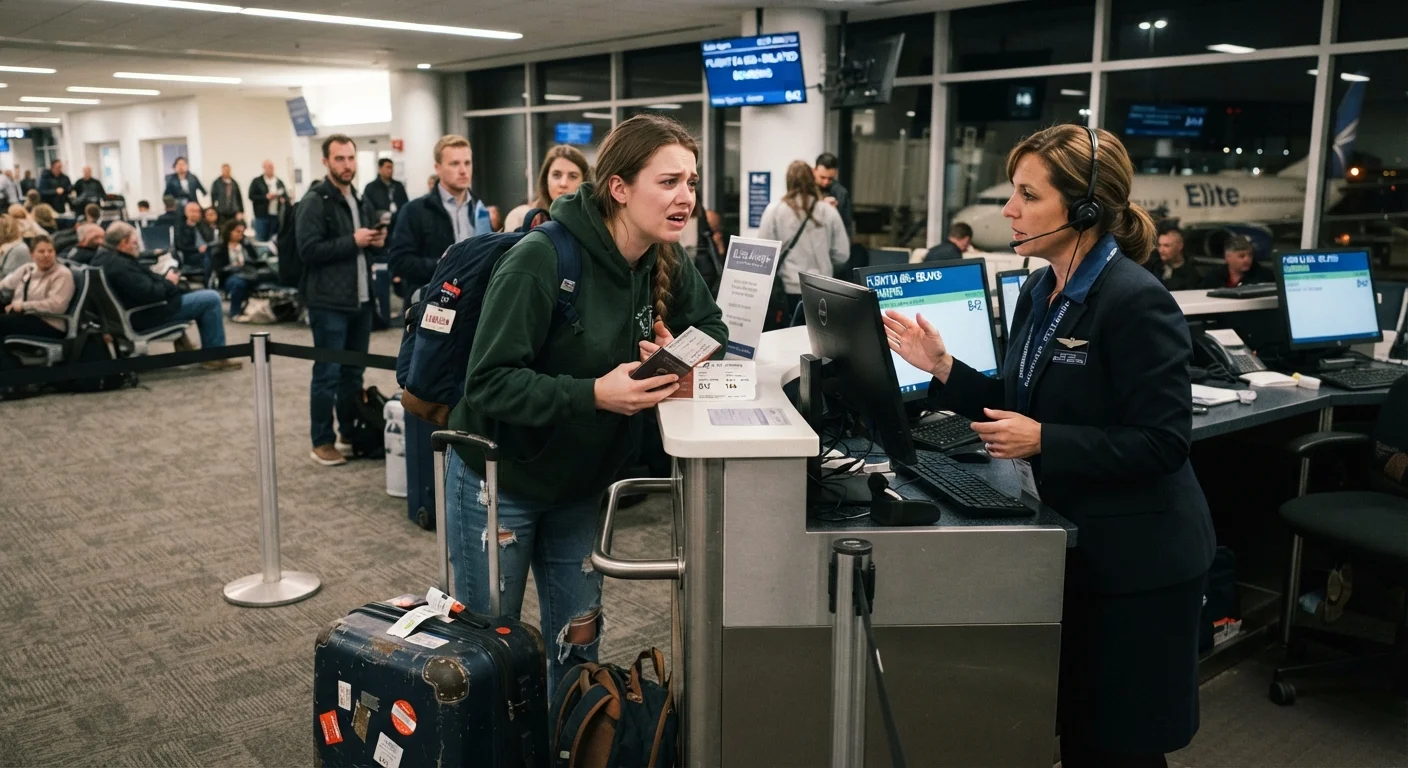
Why Denied Boarding Happens More Often Than You'd Think
Getting turned away at the boarding gate feels like something that only happens to other people — until it happens to you. In reality, airlines and border agents deny boarding to thousands of passengers every year, and the reasons are almost always the same small set of preventable mistakes.
Understanding what actually triggers a denial is the first step. It is rarely dramatic. Most travellers who are turned away had a name typed incorrectly, a passport that expired too soon, or a visa requirement they did not know existed. These are fixable problems — but only if you catch them before you reach the gate. See our guide to reading your flight itinerary to understand exactly what your ticket confirms and what it does not.
Name on the ticket does not match the passport exactly.
Why it happens: Travellers often book under a nickname, omit a middle name, or make a typo — and do not notice until they are at the airport.
Passport is valid for the trip but not for the required period beyond it.
Why it happens: Travellers check that their passport has not expired, but do not know that many countries require six months of remaining validity past the return date.
Assuming no visa is needed because a friend or colleague did not need one.
Why it happens: Visa requirements are nationality-specific. A travel companion from a different country may have visa-free access while you do not.
No proof of onward or return travel when entering a country.
Why it happens: Many travellers do not realise that entry can be refused without evidence of a plan to leave, particularly on one-way tickets or open-jaw itineraries.
Checking in late on a heavily booked flight and being involuntarily bumped.
Why it happens: Travellers underestimate how common overbooking is and assume a confirmed ticket guarantees a seat regardless of check-in time.
Failing to check transit visa requirements for a connecting country.
Why it happens: Travellers focus on the destination and forget that passing through another country's airport can itself trigger an entry or transit visa requirement.
How to Do a Pre-Trip Document Audit
The most reliable defence against denied boarding is a thorough document check at least two weeks before departure. Start with your passport: confirm it is valid for the duration of your trip, and then check the entry rules for your destination. Many countries require a passport to be valid for at least six months beyond your return date — not just your departure date.
Next, verify visa requirements. Your nationality determines what you need, and that can change depending on your destination, your transit countries, and even the purpose of your visit. Never rely on what a friend experienced or what a travel forum says. Check the official embassy or consulate website for your destination country, and cross-reference with your own government's travel advisory portal.
Transit Countries Have Their Own Entry Rules
A layover in a third country is not visa-free by default. Your nationality may require a transit visa even if you never leave the airport. This is a common and costly oversight — always check the requirements for every country your itinerary passes through, using that country's official immigration source.
Finally, review your booking confirmation carefully. The name on your ticket must match the name on your passport exactly — including middle names if they appear on the travel document. If you spot a discrepancy, contact the airline immediately. Small fixes made in advance are almost always possible; corrections requested at the gate rarely are. Our article on booking form fields that matter more than they look goes deeper on where data entry errors are most likely to occur.
Also check whether your destination requires proof of onward travel — a return or connecting ticket showing you plan to leave the country. This is enforced more strictly than many first-time travellers expect.
6 months
Passport validity required beyond travel dates
Many countries, including popular destinations in Asia and Africa, require this minimum validity — even for short trips.
24 hrs
Standard check-in window opening before departure
Checking in the moment this window opens is one of the simplest ways to reduce your overbooking risk on busy routes.
What to Do If You Are at Risk of Being Bumped
Denied boarding due to overbooking is a separate issue from documentation problems, but it is just as disruptive. Airlines legally oversell seats based on historical no-show rates, and when everyone shows up, someone gets bumped. The passengers most at risk are those who check in last.
Check in as early as the window opens — typically 24 hours before departure for most carriers. If you are flying on a heavily booked route, arrive at the gate early rather than lingering at the terminal. Gate agents generally bump the last passengers to arrive. If you are asked to volunteer your seat, understand what compensation you are entitled to before agreeing — involuntary bumping rules vary by country and airline, so ask specifically what is being offered and get it in writing.
Travel disruption from any cause — including denied boarding — can have significant financial consequences. Understanding what travel insurance does and does not cover is worth doing before your trip, not after. See common travel insurance myths to avoid assumptions that could leave you out of pocket.
This article is for general informational purposes only. Entry requirements, visa rules, and airline policies change frequently. Always verify current requirements directly with the relevant embassy, consulate, or official government travel advisory before you travel.