
Why the Paris You've Seen Online Isn't the Full Picture
Travel influencers have built a very specific version of Paris: empty cobblestone alleys at golden hour, croissants held perfectly to camera, the Eiffel Tower glowing without a single crowd in sight. That version exists — but it requires either extraordinary timing, expensive access, or significant photo editing. For most first-time visitors arriving without those advantages, the gap between expectation and reality can be jarring.
This isn't a reason to avoid Paris. It's a reason to prepare honestly. The city genuinely has an extraordinary amount to offer — but navigating it well means letting go of the influencer script and understanding what the experience actually involves. The myths below are the ones that catch first-timers off guard most often.
If you're also planning a first visit to another major city, our guide to a first-time New York City visit covers a similar set of ground-level realities worth reading before you go.
Myth
Parisians are rude to tourists, especially Americans who don't speak French.
Fact
Most Parisians respond positively when visitors make a basic effort — starting with 'Bonjour' goes a long way.
The reputation for coldness is largely a misreading of cultural norms. In France, it's considered polite to greet someone before making a request — skipping straight to English in a shop or restaurant can read as abrupt, not because locals dislike tourists, but because the greeting is simply expected. A simple Bonjour, parlez-vous anglais? (Hello, do you speak English?) typically shifts the entire interaction. Most people working in tourist-adjacent roles speak functional English, and genuine warmth is far more common than the stereotype suggests.
Myth
The Eiffel Tower is the best part of Paris — you have to go to the top.
Fact
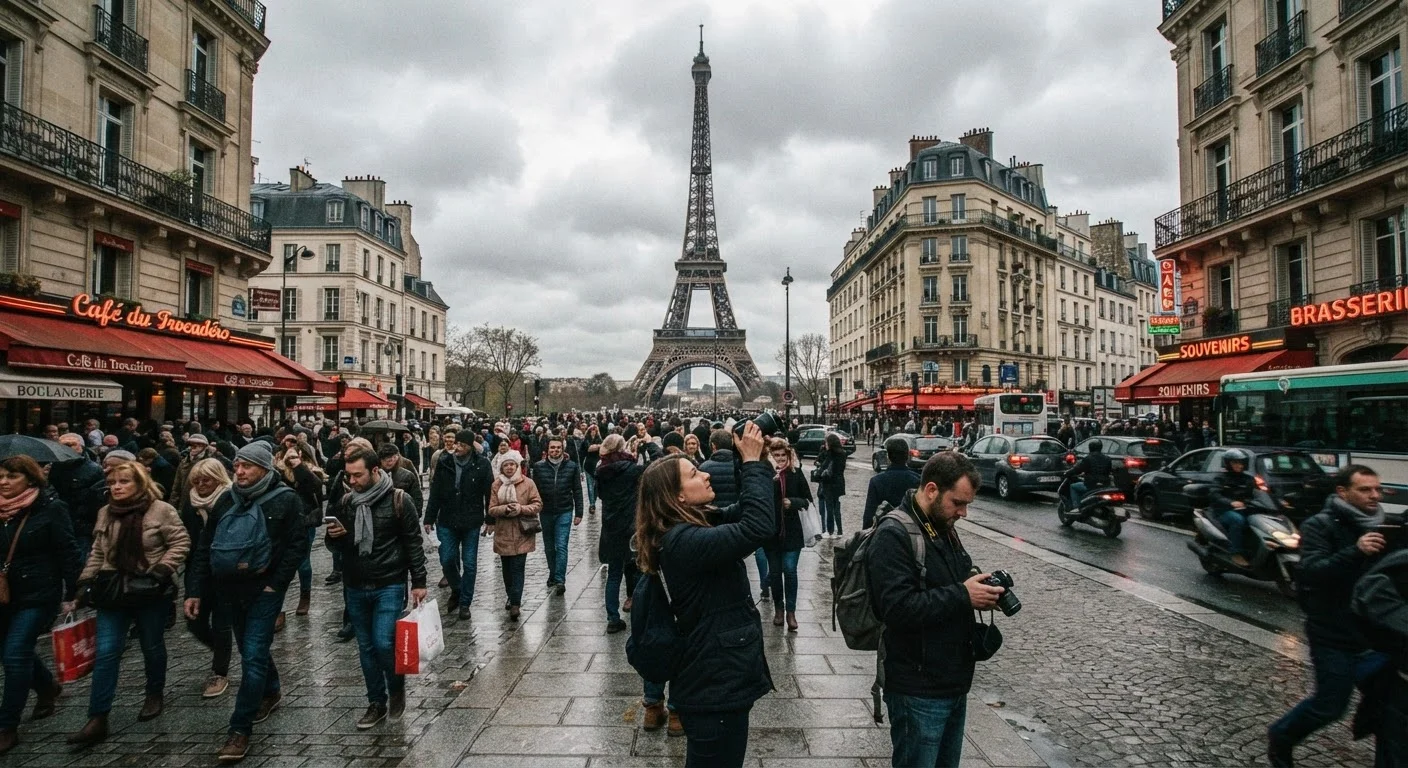
The tower is worth seeing, but the experience is crowded, expensive, and long lines are the norm without advance booking.
The view from the Eiffel Tower is real, but so are the queues — often over an hour without pre-booked timed entry, and ticket prices for the summit are considerably higher than for the lower levels. Many experienced Paris visitors argue that the best view of the tower is from a distance — from the Trocadéro esplanade or the Champ de Mars lawn — rather than from the top of it. If visiting is important to you, book timed entry tickets well in advance through the official site, arrive early, and set realistic expectations for wait times regardless.
Myth
Paris is impossibly expensive — it's only for people with big travel budgets.
Fact
Paris has a wide price range; many of the city's best experiences are free or low-cost.
Accommodation and dining near major landmarks skews the overall perception. In reality, most of Paris's best museums — including the Louvre — offer free admission on the first Sunday of each month, and permanent collections at many institutions are free for visitors under 26 from EU countries. The Métro is a genuinely affordable way to move around. Fresh food from markets and neighborhood boulangeries costs a fraction of tourist-district café prices. The city is not cheap, but it is navigable on a moderate budget with some advance planning. Our related piece on common budget travel myths is worth reading before you start pricing out your trip.
Myth
Paris is a small city — you can easily walk everywhere and see it all in a weekend.
Fact
Paris proper covers roughly 40 square miles across 20 distinct arrondissements; a weekend scratches the surface at best.
The city is far larger and more varied than most first-timers expect. Walking from the Marais to Montmartre takes well over an hour on foot — and those are both considered central neighborhoods. The 20 arrondissements (administrative districts) each have their own character, and many of the most rewarding areas for visitors sit well outside the tourist core. Trying to 'do Paris' in two days typically means doing the landmark checklist at a sprint, missing the slower neighborhood rhythms that make the city genuinely interesting. A longer stay, or a more focused itinerary, produces a much more satisfying experience.
Myth
The food in Paris is always extraordinary — every meal will be a highlight.
Fact
Food quality varies significantly; tourist-heavy areas often serve mediocre meals at premium prices.
French culinary reputation is well-earned overall, but proximity to a major landmark does not guarantee quality. Restaurants in the immediate vicinity of Notre-Dame, the Louvre, or the Champs-Élysées frequently charge elevated prices for unremarkable food. Locals generally don't eat in these areas. A more reliable strategy: walk at least two or three blocks from any major tourist site before sitting down, look for handwritten menus (a common sign of fresh, house-made food), and consider eating your main meal at lunch when many restaurants offer a formule — a set lunch menu — at meaningfully lower prices than dinner service.
What to Actually Expect When You Arrive
Understanding the myths is a start — but it helps to also know what Paris genuinely does well, and where you'll need to manage your own expectations actively.
~44M
International tourists visiting Paris annually
Paris consistently ranks among the most visited cities in the world, according to data compiled by the Paris Convention and Visitors Bureau.
16 lines
Paris Métro lines covering the city
The Métro network connects the vast majority of tourist sites and neighborhoods, making it the most practical transit option for most visitors.
1st Sunday
Of each month: free entry to the Louvre
The Louvre offers free general admission on the first Sunday of each month, a widely available but frequently overlooked option for budget-conscious visitors.
The Métro (Paris's subway system) is extensive, generally reliable, and far less intimidating than it looks on a map. A single ticket or a short-term pass covers most of what tourists need. Tipping culture differs meaningfully from the US — service charges are typically included in restaurant bills, and leaving a small additional amount is appreciated but not mandatory. Knowing this in advance prevents awkward moments at the table.
Food costs vary widely by neighborhood and format. A café lunch near the Louvre will cost substantially more than the same meal two streets away from a tourist corridor. Street markets and boulangeries (bakeries) offer genuinely affordable options that also happen to be among the best food experiences in the city.
Paris rewards slowness. Trying to visit eight landmarks in three days produces exhaustion, not memories. Our piece on how slow travel can actually save money is directly relevant here — fewer destinations, explored more fully, tend to make for both a richer trip and a more manageable budget. And before you finalize any Paris budget, check our breakdown of costs first-time travelers typically overlook — entry fees, transit passes, and tourist taxes add up faster than most people anticipate.
Pickpocketing Is a Real Risk at Major Landmarks
Crowded tourist sites — including the areas around the Eiffel Tower, Sacré-Cœur, and the Louvre — are known hotspots for pickpocketing. Keep bags zipped and worn in front of your body, avoid displaying expensive items visibly, and be cautious if approached by strangers with petitions or requests for your attention. This is not unique to Paris, but the density of tourists makes these spots particularly active. Staying aware of your surroundings is the most effective preventive measure.
Also worth understanding: Paris in July and August is a fundamentally different experience from Paris in October or March. Crowds, prices, and even which locals are actually in the city shift dramatically. Our overview of what tourist season really means for your trip can help you decide when your visit makes the most sense.