

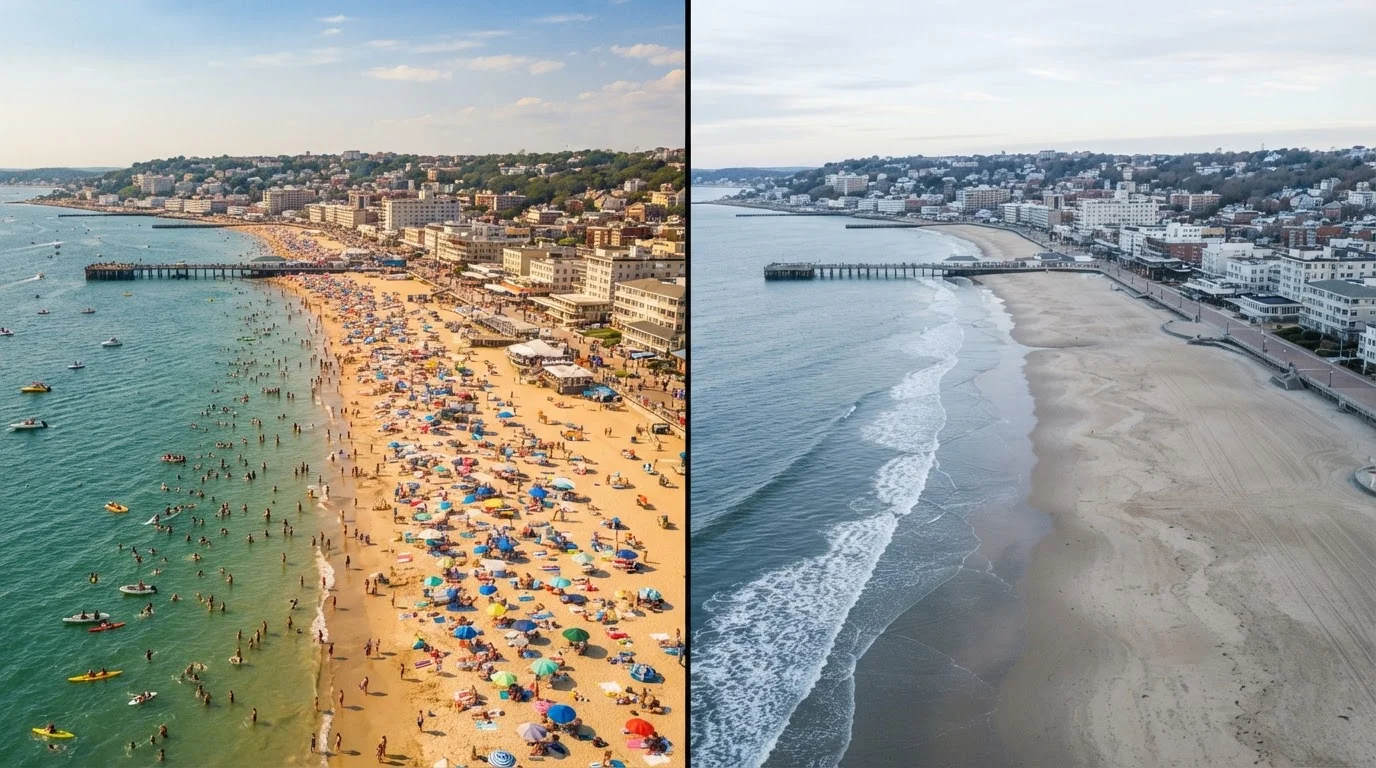
The Three Seasons Every Destination Has
Every destination — whether it's a coastal beach town, a mountain hiking hub, or a major city — operates on a demand cycle that shapes the entire visitor experience. That cycle has three broad phases:
- Peak season: The period of highest visitor volume. Expect higher accommodation prices, longer lines at attractions, crowded restaurants, and the destination operating at full capacity. For most European cities, this is summer. For ski resorts, it's winter. For theme parks, it's school holidays year-round.
- Shoulder season: The transition periods on either side of peak. Weather may be slightly less ideal, but crowds thin out and prices often drop. Many travelers find this the most practical time to visit — you still get a functioning destination without the intensity of peak demand.
- Off-season: The period of lowest demand. Prices can be significantly lower, but so is what's available. Some hotels close entirely. Ferry routes may stop running. Restaurants in resort towns often shutter. Weather can be the main driver — think monsoon season in Southeast Asia or blizzard season in alpine towns.
Understanding which phase a destination is in when you plan to arrive isn't just about price — it shapes the entire character of your trip. For a deeper look at the real trade-offs of low-season travel, see Off-Season Travel: The Trade-Offs Behind Cheaper Prices.
3x
Price variation between peak and off-season travel
Travel industry research consistently shows accommodation and flight prices can vary dramatically between high and low demand periods, with some popular routes and destinations showing gaps of two to three times baseline pricing during peak holiday windows.
~40%
US leisure trips taken in summer months
According to US Travel Association data, a disproportionate share of American leisure travel is concentrated in summer, contributing directly to peak-season demand and pricing at popular domestic and international destinations.
2–3 months
Typical shoulder season window at most destinations
Most temperate destinations experience shoulder season periods of roughly two to three months on either side of their peak — generally enough time to plan a trip if dates are flexible.
What Actually Drives Tourist Seasons
Weather is the most obvious factor, but it's not the only one — and sometimes it's not even the primary one.
School and Holiday Calendars
In the US, summer break, spring break, and the December holiday window create predictable demand spikes almost everywhere families travel. These periods can push peak-season conditions even at destinations where the weather is actually better in spring or fall.
Local Events and Festivals
A normally quiet destination can surge to full peak-season conditions during a major festival, sporting event, or cultural celebration. Carnival in Rio, Mardi Gras in New Orleans, Oktoberfest in Munich — these events create micro-peaks that can affect accommodation pricing and availability for the entire surrounding region.
Weather Windows and Safety Thresholds
Some destinations have narrow windows when conditions are genuinely safe and comfortable for visitors. Hiking trails at altitude may only be reliably passable for a few months. Tropical beaches may be stunning in dry season and genuinely hazardous — not just rainy — during cyclone season. This is worth checking through official sources, not just travel blogs. For guidance on reading destination conditions critically, see Reading a Destination Safely.
Don't Assume One Region's Seasons Apply Globally
A common beginner mistake is applying Northern Hemisphere summer-equals-peak logic to destinations in the Southern Hemisphere or the tropics. In many tropical destinations, the dry season (often December through March) is peak season, and local summer can coincide with monsoon conditions. Always research the specific destination's calendar rather than assuming seasons work the same way everywhere.
How Season Changes What You'll Actually Experience
Knowing a destination's seasonal rhythm helps you set realistic expectations — not just for price, but for the full shape of your trip.
Crowds and Atmosphere
Peak-season Venice is a different city than November Venice. The same landmark that feels magical with room to breathe can feel exhausting when shared with thousands of other visitors. If atmosphere matters to you, season matters.
Prices Beyond Just Hotels
Flights, tours, rental cars, and even some restaurant menus shift with seasonal demand. A round trip that costs $400 in October might run $900 over spring break to the same airport. Seasonal pricing isn't limited to accommodation — it's systemic across tourism infrastructure. If you're working with a limited travel budget, understanding seasonal pricing is foundational. The Budget Travel From the Ground Up guide covers how to factor this into your overall planning.
What's Actually Open
This catches many first-time travelers off-guard. In resort towns, off-season can mean that the restaurant you planned to visit is closed for the season, the regional bus only runs twice a week, and the museum you came to see has reduced hours. Research what's operating — not just what exists — before you finalize dates.
Reading a Destination's Calendar Before You Book
The practical skill here isn't memorizing seasonal windows for every destination — it's building a research habit that gives you accurate information before you commit money.
- Start with the official tourism board. Most countries and major cities publish seasonal visitor guides. These are reliable starting points for identifying peak periods and any weather or event-based factors.
- Check government travel advisories. These often flag seasonal safety considerations — hurricane seasons, monsoon flooding, extreme heat — that a destination's own tourism marketing may downplay.
- Look at what's open, not just what exists. Search specifically for operating dates of attractions, ferries, or regional transport for your target travel window. A destination's main website often lists seasonal closures.
- Factor in your flexibility. If your dates are fixed by work or school, you may be traveling during peak season regardless. Knowing this in advance lets you book accommodation early and budget accurately rather than being surprised.
Timing also connects to trip pacing. If shoulder season gives you more affordable options, you might find that spending more time in fewer places stretches both your budget and your experience further than a rushed multi-city itinerary during peak.
“The traveler who does their homework before departure — understanding not just where they're going, but when and what that timing means — is the traveler who arrives prepared for the place as it actually is, not as they imagined it.”
— Travel Smart Editorial Team, Independent travel guidance publication