

Why Post-Trip Budget Reviews Actually Matter
Most travel budgeting advice focuses on what to plan before you leave. That's useful, but it's incomplete. The sharpest travel budgeting skill you can build is the habit of reviewing what you actually spent once you're home — while the trip is still fresh.
Pre-trip estimates are educated guesses. A post-trip review is real data. It tells you which categories you consistently underestimate, which spending felt genuinely worthwhile, and where money leaked without adding anything to your experience. If you want to understand how your habits connect to your spending, this is where budgeting basics meets real-world travel.
If you're still building your foundational travel finance skills, the Budget Travel From the Ground Up guide covers the core principles before you dive into analysis.
Track During the Trip, Even Roughly
A post-trip review is much easier if you logged expenses as you went — even once a day at the end of each evening. A simple note on your phone with running daily totals takes less than two minutes and saves significant reconstruction effort when you're home. If you're deciding between tools, consider what you'll actually use consistently rather than what has the most features.
What You Need Before You Start
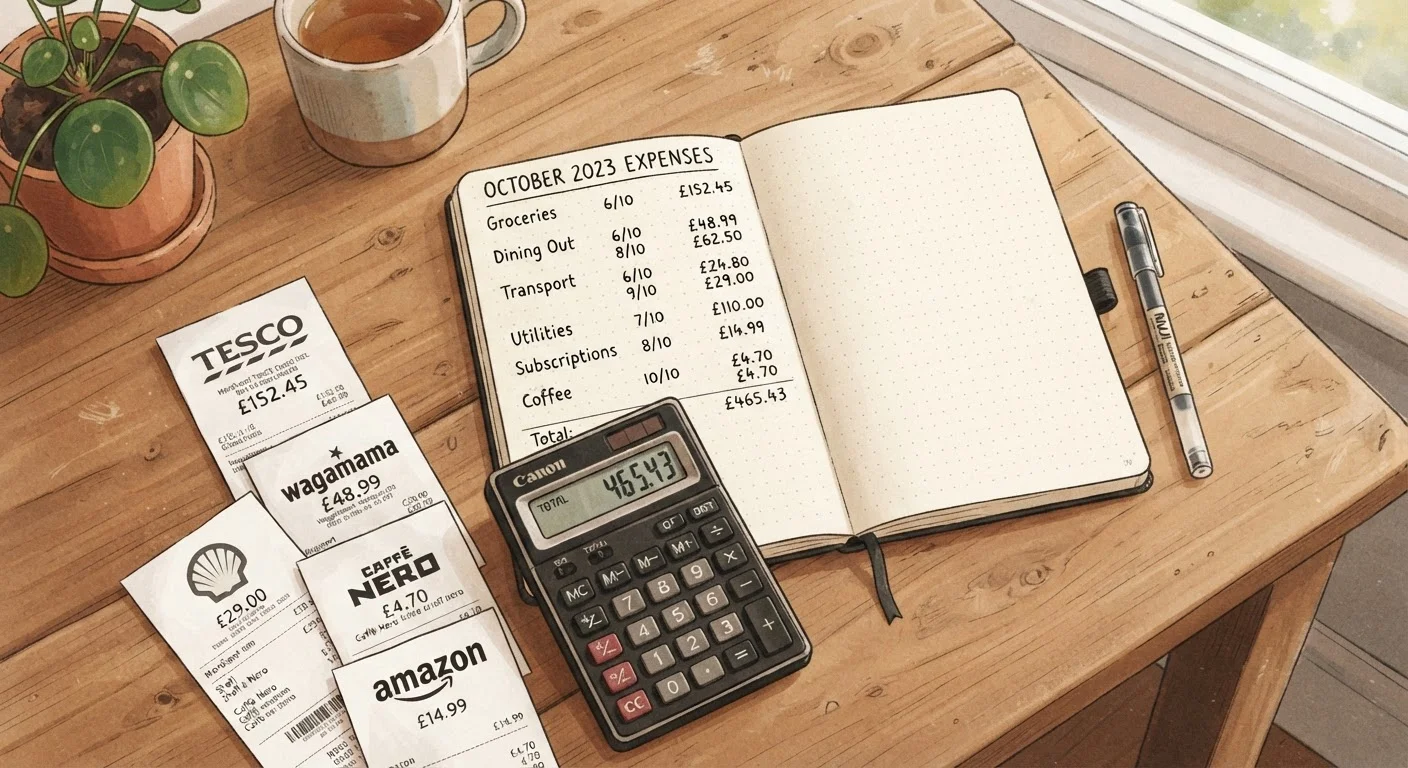
A useful review requires the raw material to work with. Before sitting down to analyze your spending, gather everything you have from the trip.
What you will need
If you tracked spending in real time during the trip, this step is quick. If you didn't, piece together what you can from bank statements, app histories, and email receipts. Incomplete data is still useful — just note where the gaps are so you don't mistake silence for zero spending. For a comparison of tracking tools that work well during a trip, see Spreadsheet vs. App: Two Ways to Track Your Spending.
Step-by-Step: How to Read Your Travel Budget
Work through these steps in order. The goal is not to judge your past choices but to extract usable information for next time.
List Every Expense and Assign It a Category
Go through all your sources — bank statements, app records, receipts — and log each expense. Assign each one to a standard category: accommodation, food and drink, local transport, long-distance transport, activities and entry fees, shopping, and miscellaneous.
Be consistent. If you grab coffee at a museum café, that's food — not activities. Consistency is what makes the totals comparable across trips.
Total Each Category and Compare to Your Pre-Trip Estimate
Sum the totals for each category, then place them side by side with what you originally planned to spend. Calculate the difference — positive or negative — for each line.
This comparison is the core of the review. A category that ran 30% over your estimate isn't a personal failure; it's a data point telling you your assumption about that cost was off.
Flag Where Money Went Without Adding Value
Go back through your expense list and mark any item you'd skip on a future trip — things you barely used, experiences that didn't live up to cost, or purchases that felt reactive rather than deliberate (convenience buys at airports, overpriced tourist-area meals).
This isn't about regret. It's about identifying spending patterns that don't align with what you actually value when you travel.
Calculate Your True Daily Average
Divide your total trip spend by the number of days you were traveling. This number — your actual daily average — is one of the most useful figures you can carry forward.
Compare it to what you assumed your daily rate would be before the trip. Most first-time travelers underestimate their daily average by a meaningful margin, especially when travel days with transport and airport costs are included.
Write a Brief Summary of What You'd Change
In plain language — a few bullet points or a short paragraph — note what you'd do differently based on the numbers. This might include: increasing your food budget, cutting shopping allocation, or building in a buffer for miscellaneous costs that always appear.
Keep this summary with your budget data. It becomes your personal planning reference before the next trip.
Once you've completed the review, file it somewhere you'll find it before your next trip. A single page of honest notes about where your money actually went is worth more than any generic planning template.
Don't Mistake Incomplete Data for Zero Spending
Cash spending, small local transactions, and shared group costs often don't show up in bank records. If you know you spent cash but don't have a figure, use a reasonable estimate rather than leaving the category blank. An honest approximation produces a more useful review than artificially clean numbers.
Turning Insights Into Better Future Budgets
The review only pays off if you use it. A few patterns to look for once your numbers are organized:
- Consistent category overruns — If food always costs more than estimated, that's not bad luck; it's a baseline to adjust.
- Low-value spending — Money spent on things you barely remember is money that could shift toward experiences that mattered.
- Hidden cost blindspots — Entry fees, tips, local transport, and currency exchange losses often go untracked. The article on what first-time travelers forget to budget for maps these out in detail.
- Pace and location effects — If you spent heavily on transit between cities, that's a signal worth examining. Slow travel is one structural way to reduce that cost on future trips.
Before your next booking, run your revised estimates against the pre-trip budget checklist to make sure your new assumptions hold up under scrutiny.