

Why Ground Transportation Eats More of Your Budget Than You Expect
For first-time travelers, flights and accommodation dominate the planning headspace — but ground transportation quietly becomes one of the biggest daily expenses. A few ride-hailing trips in an unfamiliar city can cost as much as a night's hostel bed. The good news is that most cities, domestic and international, have low-cost or free options that experienced travelers rely on every day.
The strategies below apply broadly, but if you're heading somewhere specific, destination-level transit details matter. Our NYC first-timer guide and Tokyo first-timers guide break down transit specifics you won't find on a generic travel blog. For the bigger budget picture, start with our budget travel starter guide.
Download offline maps before you land
Data roaming can be expensive and unreliable, especially abroad. Before your flight, download offline maps for your destination city using a mapping app that supports it. This gives you turn-by-turn walking directions, neighborhood layouts, and transit line overviews — even with no signal. Knowing roughly how a city is shaped helps you judge whether a walk is realistic or a bus is needed, which prevents the panic that leads to expensive last-minute cab decisions.
Offline maps prevent the panic decisions that send you straight to a taxi.
Use the city's official transit app or card
Most major cities have an official transit app or a reloadable transit card that covers buses, subways, trams, and sometimes ferries. These systems are almost always cheaper per trip than ride-hailing, and they're designed for daily use — meaning they scale well. Look up the city's transit authority website before you travel to understand what payment methods are accepted. Some cities have moved to contactless bank card payment at the turnstile, eliminating the need for a separate card entirely.
For international destinations, check whether your card's foreign transaction fees make a local transit card a smarter choice.
Official transit cards are almost always cheaper per trip than ride-hailing alternatives.
Investigate day passes and multi-day transit passes
If you plan to take more than three or four transit trips in a day, a day pass often costs less than paying per ride. Many cities extend this to 48-hour or 72-hour passes, which can represent significant savings across a weekend visit. Check the transit authority's website for visitor-specific passes — some cities offer tourist cards that bundle unlimited transit with museum entry discounts, which can stack your savings further. Do the math based on your planned itinerary before buying.
A day pass often costs less than three individual fares — do the math before you tap.
Walk more than you think you should
Travelers consistently underestimate how walkable unfamiliar cities are, because distances look large on a zoomed-out map. Many city centers — where most attractions, food, and transit hubs cluster — are genuinely compact. A 15-minute walk costs nothing, gives you street-level context that no vehicle can, and often reveals the neighborhood character that makes a destination worth visiting. Check the walking time on your offline map before defaulting to transit; you may find it's shorter than expected. This matters especially in dense urban destinations like Mexico City, where neighborhood-hopping on foot is often the most rewarding way to explore.
Walking is free and often reveals more about a city than any transit route can.
Use bike-share and scooter-share programs strategically
Most mid-sized and large cities now operate some form of public or semi-public bike-share. These are useful for the middle-distance trips that are too far to walk but too short to make transit worthwhile. Rates vary, but short rides are generally low-cost, and many systems offer day memberships. Before renting, check whether the city has dedicated bike lanes on your planned route — cycling in heavy traffic without infrastructure is not advisable for unfamiliar riders. Scooter-share programs operate similarly, though local regulations around where they can be ridden differ significantly by city.
Bike-share fills the gap between walking distance and transit distance at low cost.
Ask your accommodation about free or discounted transit
Some hotels, hostels, and guesthouses in transit-heavy cities provide guests with free transit passes for the duration of their stay, or include them as part of a tourist tax arrangement with the city. Others have partnerships with local bike-share programs. This is rarely advertised prominently — it's worth asking at check-in, or checking the accommodation's FAQ page before you arrive. Some European cities include city-wide transit in the tourist tax, meaning you're already paying for it whether you use it or not.
Your accommodation may already include transit perks — always ask at check-in.
Learn the layout of one transit hub early
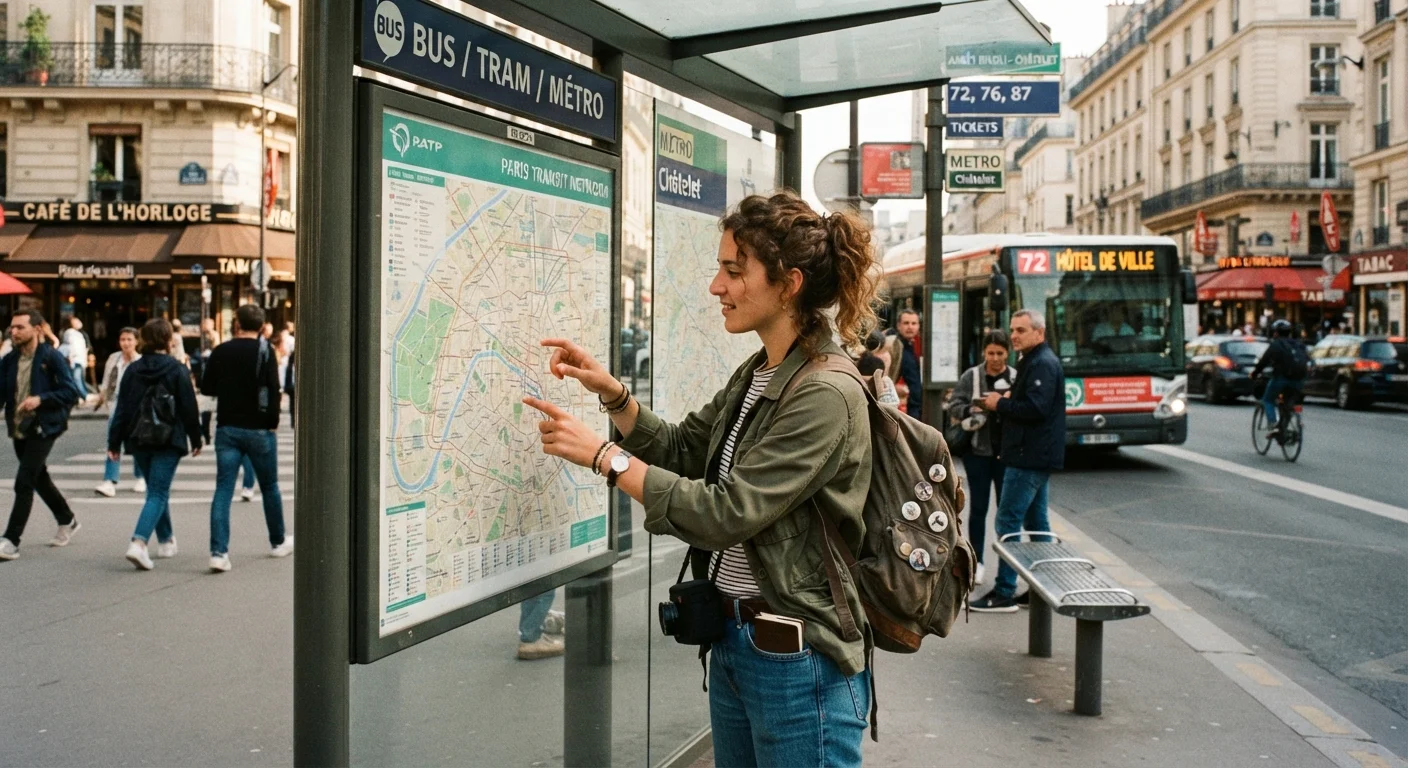
In most cities, a handful of central transit hubs — a main train station, a major bus interchange, a key subway junction — connect most of the routes you'll use. Spending 20 minutes understanding how one of these hubs works, ideally when you're not in a rush, pays dividends for the rest of your trip. You'll navigate more confidently, lose less time to wrong turns, and feel less dependent on taxis as a fallback. Maps posted inside transit stations are often clearer than digital versions for getting a quick spatial sense of a network.
Mastering one central transit hub early makes the whole city feel navigable.
Build a Ground-Transportation Habit That Lasts
The travelers who spend the least on getting around aren't lucky — they're prepared. A few minutes of research before you land, the right apps downloaded while you still have reliable Wi-Fi, and a willingness to walk an extra block or two will consistently outperform any deal you could find on a ride-hailing surge. These habits also pair well with a slow travel approach: when you spend more time in one city, learning its transit network pays off far more than when you're rushing between destinations. And if ground costs are already on your radar, make sure flight fees aren't quietly offsetting your savings — our guide on low-cost airline fees is worth reading before you book.
Research Transit Before You Land
Spend 10–15 minutes on the city transit authority's website before your trip — not a third-party travel site. You'll find accurate fare information, visitor pass options, and route maps. Many transit authorities also publish accessible guides specifically for tourists. This single step removes most of the uncertainty that drives travelers toward more expensive options.
This article provides general travel information for educational purposes. Fares, routes, app availability, and transit options vary by city and change over time — always verify current details with local transit authorities or official city resources before your trip.