

Finding the Right Fit Before You Commit
The appeal of a small pet is obvious — they take up less space, generally cost less to feed, and many don't need to be walked twice a day. But "small" doesn't automatically mean "easy." Before choosing any animal, it's worth being honest about your daily routine, your home setup, and how much variation you can realistically handle. Our guide on assessing pet readiness is a good starting point if you're still weighing whether now is the right time at all.
If you rent, check your lease before falling in love with any species. Even "caged" animals are sometimes restricted. See our renting and pet ownership guide for what to look for. Once you've cleared those basics, the list below can help you match your situation to an animal that can genuinely thrive in it.
Betta Fish
A single betta fish in a properly cycled tank of at least five gallons is one of the most manageable pets for a small apartment. Bettas don't need companions (they're actually aggressive toward other bettas), they don't make noise, and their daily care — feeding once or twice a day and a weekly partial water change — fits into almost any schedule.
The setup investment matters: a filtered, heated tank with stable water parameters is essential for a betta's health. Poor water quality is the leading cause of illness in pet fish. Once the tank is established, ongoing maintenance is straightforward. Bettas have distinct personalities and can become interactive over time, recognizing their owner and responding to movement near the tank.
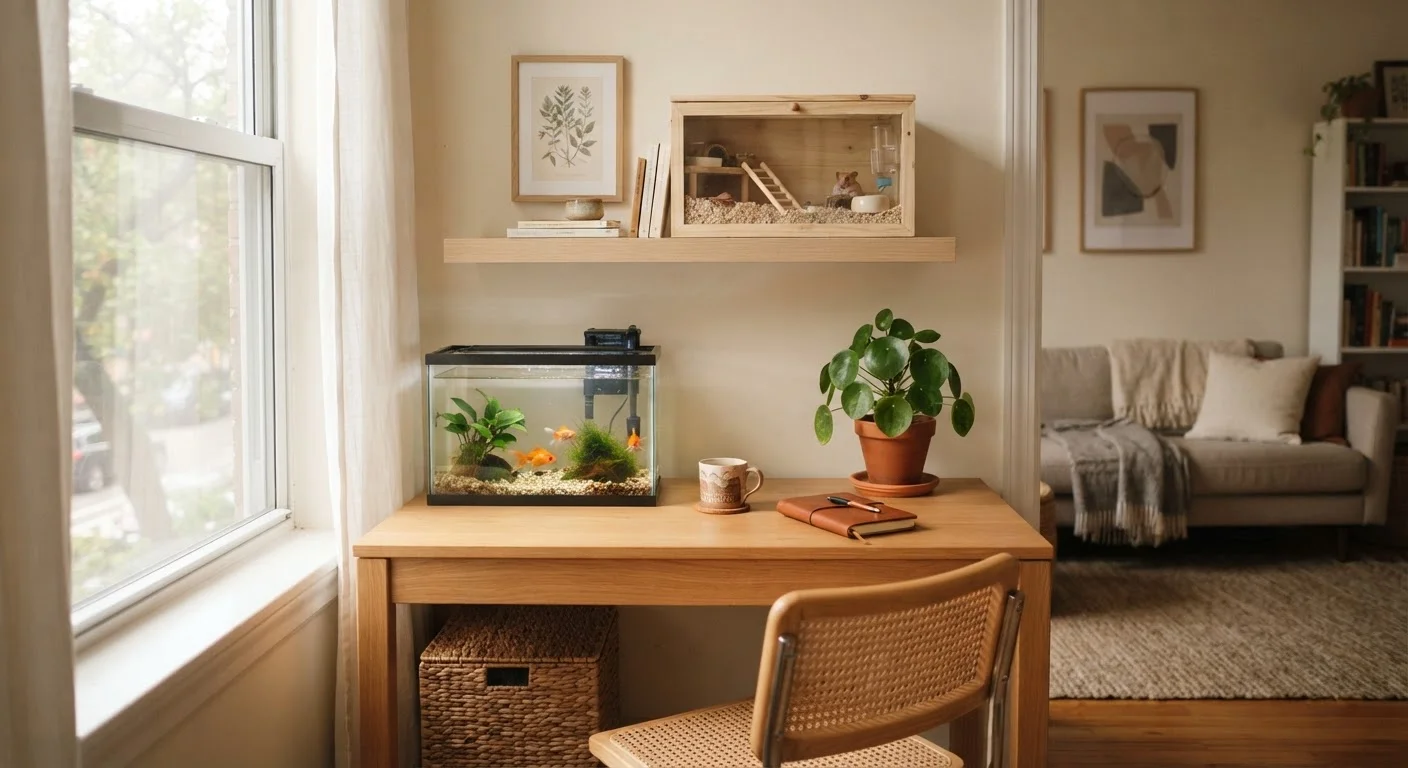
A properly set up betta tank requires minimal daily time while offering a calming, visual presence at home.
Syrian Hamster
Syrian hamsters (sometimes called golden hamsters) are solitary, nocturnal, and self-contained — a combination that suits many working adults. They need a cage large enough to run, burrow, and forage (bigger than most pet store starter kits suggest), a solid-surface wheel, and fresh food and water daily. Spot-clean bedding regularly and do a full clean every one to two weeks.
Because they're most active in the evening and night, they naturally align with people who are out during the day. They're not ideal for early-morning quiet households, as they may be active when you're trying to sleep nearby. Handle them gently and consistently from a young age to build trust — an untamed hamster can bite.
Syrian hamsters are naturally suited to people who are out all day and home in the evenings.
Guinea Pig
Guinea pigs are social animals — most animal welfare organizations recommend keeping at least two together so they can communicate and groom each other. They're active during the day, vocal in a gentle way (they "wheek" when they hear food coming), and can become quite affectionate with regular handling.
Their care is more hands-on than a hamster's: they need fresh hay available at all times, daily fresh vegetables (vitamin C is critical for their health since they can't produce it themselves), clean water, and a spacious enclosure. They're a good match for someone who has a couple of hours in the evening and genuinely enjoys interacting with their animal, rather than observing it from a distance. See pet care basics for more on building consistent care routines.
Guinea pigs thrive in pairs and reward owners who enjoy hands-on daily interaction.
Leopard Gecko
Leopard geckos are one of the most beginner-friendly reptiles. They're quiet, don't need UVB lighting (though some sources now suggest it's beneficial — ask your vet), and are calm enough to handle once acclimated. They eat live insects like crickets or mealworms a few times per week and need a temperature gradient in their enclosure maintained by an under-tank heater or appropriate lamp.
Their enclosure setup has a learning curve, and "gut-loading" feeder insects (feeding the insects nutritious food before offering them to your gecko) is an important step many first-time owners skip. But once routines are established, daily care is light. They live 15–20 years with good care, so this is a long-term commitment worth taking seriously.
Leopard geckos are quiet, calm, and manageable — but live up to 20 years, so plan accordingly.
Budgerigar (Budgie)
Budgies are small parrots with outsized personalities. They're social, vocal, and intelligent — which means they need daily interaction and mental stimulation to stay healthy. A lone budgie needs significant time with its owner; a pair can keep each other company but still requires daily engagement and a clean, enriched environment.
They're not the right fit for someone who travels frequently or works very long hours without a backup plan. But for someone who is home most evenings and wants an interactive, entertaining companion that fits in a studio apartment, a well-socialized budgie can be genuinely rewarding. Note that birds produce fine feather dust, which can affect people with respiratory sensitivities. Indoor living considerations are especially relevant for birds, who should generally be kept inside for their own safety.
Budgies need daily interaction to stay mentally healthy — they're social animals, not decoration.
Rabbit
Rabbits are often underestimated. They're quiet, litter-trainable, and can free-roam a rabbit-proofed space rather than living in a cage full-time — which makes them feel less like a "starter pet" and more like a genuine companion. They need hay as the bulk of their diet, daily fresh greens, and regular grooming (especially long-haired breeds).
They also need several hours of exercise outside a cage each day, so a sedentary setup isn't appropriate. They're fragile compared to dogs and cats — they can injure themselves if handled incorrectly, and they're prey animals that may not enjoy being picked up. Rabbits are a better match for calm households than for homes with very young children or other animals that might stress them. Consider how your living situation aligns with a rabbit's space and exercise needs before committing.
Rabbits are litter-trainable and deeply rewarding companions — but need more care than most people expect.
A Few Things to Keep in Mind Across All Small Pets
Whatever species you choose, routine veterinary care matters. Small animals can hide illness well, so finding a vet experienced with your specific species before a problem arises is important — not all general practice vets see rabbits, reptiles, or rodents. Explore pet health and vet resources to understand what to look for in a provider.
It's also worth thinking carefully about what "low-maintenance" actually means in practice. Cage cleaning, fresh water, diet variety, and social interaction all take time — even for the quietest, smallest animal on this list. The pets here are genuinely manageable for busy people, but only when their specific needs are understood and met consistently.
Start With a Species Research Checklist
Before acquiring any small pet, look up its average lifespan, typical vet costs, diet complexity, and social needs as a minimum. Many small animals live five to fifteen years — longer than people realize. A little research upfront prevents a mismatch that's hard to undo.
"Small" Doesn't Always Mean Inexpensive
Initial setup costs for a proper enclosure, heating, lighting, or tank filtration can run into the hundreds of dollars before you've bought a single animal. Ongoing costs — food, bedding, vet visits — add up across the animal's lifespan. Budget honestly for the full commitment, not just the purchase price.