

What These Two Strategies Have in Common
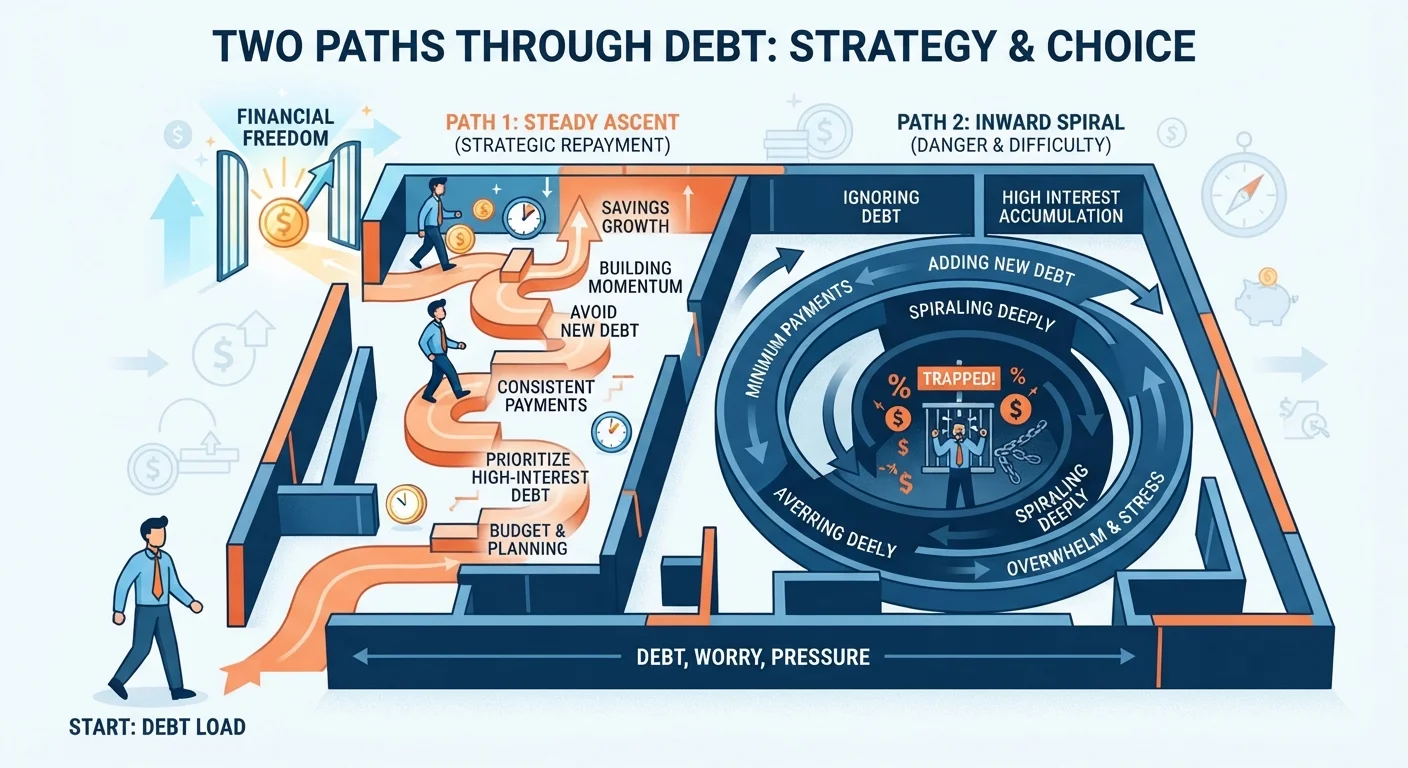
Before diving into the differences, it helps to understand the shared foundation. Both the snowball and avalanche methods are structured approaches to paying off multiple debts simultaneously. With either strategy, you:
- Continue making the minimum payment on every debt each month — skipping minimums damages your credit and triggers fees.
- Direct any extra money — even a small amount — toward one specific target debt at a time.
- Redirect the money freed up when one debt is eliminated toward the next target.
That last step is where the momentum builds. Each time you pay off a debt, the payment you were making on it rolls into your attack on the next one, gradually increasing the force behind each repayment push. Neither method is a shortcut — both require genuine commitment and a budget that has room for extra payments. If you're unsure how to structure a budget that supports this, see our guide on budgeting approaches compared.
This article is for general informational purposes only and does not constitute personalised financial advice. Consider speaking with a qualified financial professional about your specific situation.
How the Snowball Method Works
The debt snowball, popularised by financial educators, prioritises your smallest balance first, regardless of the interest rate attached to it.
The basic steps:
- List all your debts from smallest balance to largest.
- Pay minimums on every debt except the smallest.
- Put every extra dollar toward the smallest balance until it is gone.
- Roll that entire payment into the next-smallest debt and repeat.
The appeal is psychological. Eliminating a debt completely — even a small one — feels like a genuine win. Research in behavioural economics suggests that small, visible milestones help people maintain effort over long timelines. For someone juggling several debts and feeling overwhelmed, closing an account entirely can shift their mindset from this is impossible to this is working.
The trade-off is real, though. If your smallest balance carries a low interest rate while a larger balance compounds at a high rate, you may pay more in total interest than you would with the avalanche approach. For people dealing with credit card debt specifically, this gap can be meaningful — see our overview on keeping credit card debt under control for context on how card interest compounds.
How the Avalanche Method Works
The debt avalanche prioritises your highest interest rate first, regardless of the balance size.
The basic steps:
- List all your debts from highest interest rate to lowest.
- Pay minimums on every debt except the one with the highest rate.
- Put every extra dollar toward that highest-rate debt until it is gone.
- Roll that payment into the next-highest-rate debt and repeat.
Mathematically, this approach minimises the total interest you pay across all your debts over time. Interest is essentially rent you pay on borrowed money — the higher the rate, the faster the balance grows if left untouched. Attacking the highest rate first stops the most expensive growth as early as possible.
The challenge is patience. If your highest-rate debt also happens to be your largest balance, it could take months or longer before you fully eliminate it. During that stretch, you won't experience the milestone of closing an account. For some people, that delay erodes motivation.
| Criterion | Debt Snowball | Debt Avalanche |
|---|---|---|
| Repayment order | Smallest balance first | Highest interest rate first |
| Total interest paid | Often higher overall | Typically lower overall |
| Time to first win | Faster — smaller debts close sooner | Slower — depends on balance size |
| Motivational structure | Frequent milestones | Fewer short-term milestones |
| Mathematical efficiency | Lower — ignores interest rates | Higher — minimises interest cost |
| Best when rates are similar | Yes — gap to avalanche shrinks | Marginal advantage only |
| Best when one rate is very high | Less ideal | Yes — biggest savings here |
If your debt mix includes student loans, the avalanche can be especially worth examining. Our student loan debt overview explains how federal and private loan rates differ and why that matters for prioritisation.
Choosing the Right Approach for You
The honest answer is that the best method is the one you will actually stick with. Both strategies lead to paying off debt — the differences lie in the journey, not the destination.
~20%
Average US credit card APR (recent years)
The Federal Reserve has reported average credit card interest rates hovering near or above 20% APR in recent years, underscoring why high-rate debt compounds quickly.
3 in 4
US adults carrying some form of debt
Federal Reserve consumer finance surveys consistently show that a large majority of American households hold at least one form of debt, from student loans to credit cards.
A few practical questions to help you decide:
- How do you respond to slow progress? If long stretches without a milestone make you want to give up, the snowball's early wins offer a real advantage.
- How large is the interest rate gap between your debts? If one debt carries a significantly higher rate than the others, the avalanche's savings on that account may outweigh the motivational benefits of the snowball.
- Are any of your debts close to being paid off already? If so, knocking them out quickly with a snowball approach costs you very little extra in interest while delivering an immediate boost.
It's also worth understanding the nature of the debt you're carrying before committing to a strategy. Some debt is structured differently and may have repayment considerations beyond just rate and balance. Our article on good debt vs. bad debt can help you frame your debts in broader context before you start.
And if you're considering taking on new debt while repaying existing balances, read through this self-assessment checklist first.