

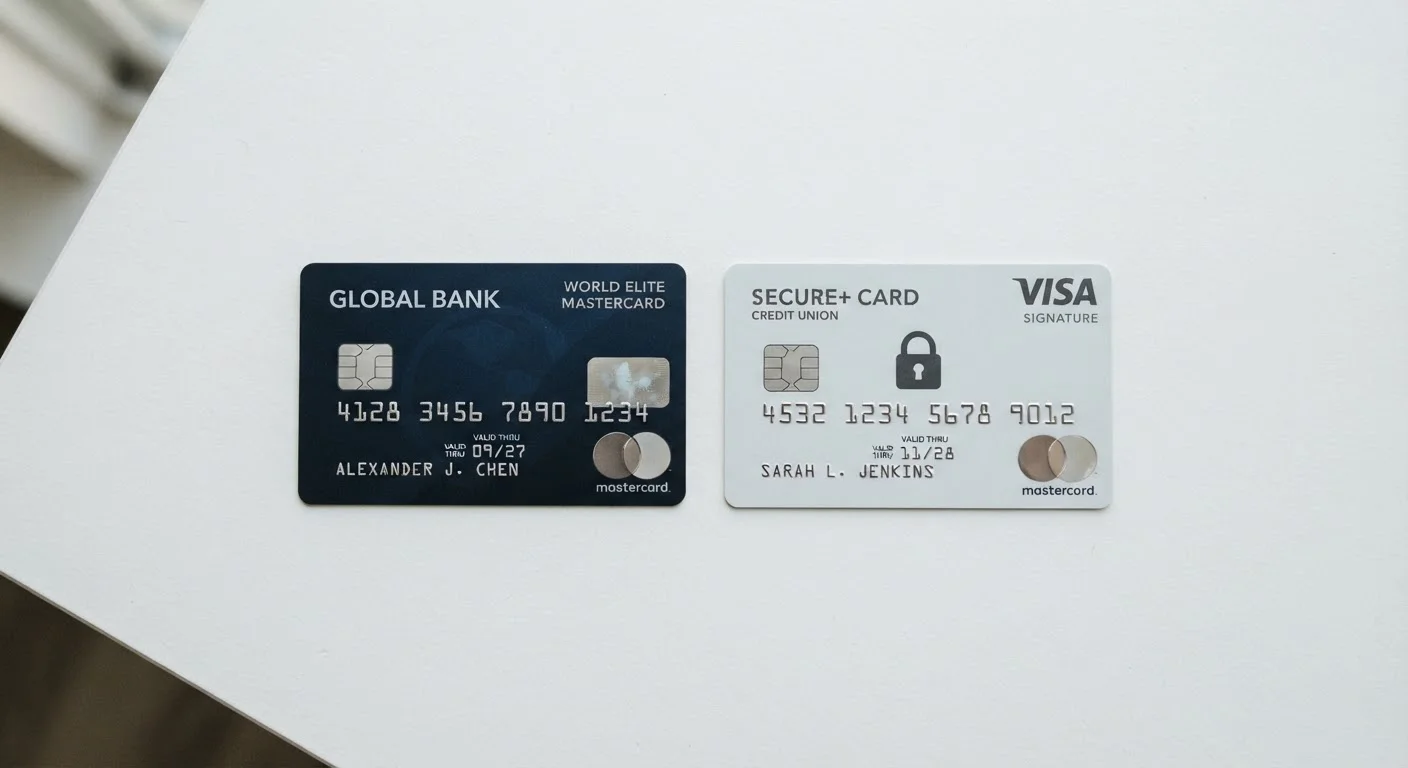
The Core Structural Difference
At the most basic level, a secured credit card requires you to make a refundable cash deposit before you can use it. That deposit — typically ranging from $200 to $500, though amounts vary by card issuer — usually becomes your credit limit. A unsecured credit card requires no deposit; the lender extends you a credit line based on your creditworthiness alone.
That deposit is not a prepayment. You are still borrowing money each time you swipe, and you are still expected to make monthly payments. If you stop paying, the issuer can eventually use the deposit to cover what you owe — that's the "security" in the name. Understanding this distinction also helps clarify how credit cards differ from debit cards: see how debit and credit cards really differ for a side-by-side breakdown.
| Secured Credit Card | Unsecured Credit Card | |
|---|---|---|
| Upfront deposit required | Yes — sets your credit limit | No deposit needed |
| Typical approval difficulty | Easier — suitable for thin/damaged credit | Harder — depends on credit history |
| Reports to credit bureaus | Yes | Yes |
| Charges interest on unpaid balances | Yes | Yes |
| May include annual fees | Often yes | Varies widely |
| Credit limit flexibility | Usually tied to deposit amount | Set by issuer based on creditworthiness |
| Path to upgrade | Graduation possible after responsible use | Upgrade or new applications as credit improves |
What Stays Exactly the Same
Here is what many first-time cardholders don't realize: from a credit-building standpoint, secured and unsecured cards work identically. Both types report your payment history, credit utilization, and account age to the three major credit bureaus — Equifax, Experian, and TransUnion. Paying on time each month helps your credit score regardless of which type you hold.
Both card types also charge interest — expressed as an APR — on any balance you carry past the due date. Both may include annual fees, late fees, or foreign transaction fees. The card type alone does not determine how expensive or rewarding the card is; you still need to read the fee disclosures carefully before applying.
Keep Utilization Low on Either Card
Credit utilization — the percentage of your available credit you're using — is one of the most influential factors in your credit score. Aim to keep your balance below 30% of your credit limit at all times, regardless of whether your card is secured or unsecured. For a secured card with a $300 limit, that means keeping your statement balance under $90. Paying in full each month is even better and avoids interest charges entirely.
Who a Secured Card Is Built For
Secured cards exist primarily to serve two groups: people who are building credit from scratch and people who are rebuilding credit after past difficulties. Because the deposit reduces the lender's risk, issuers are generally more willing to approve applicants who would be declined for a standard unsecured card.
If you are just starting out, our guide on building credit from zero walks through realistic paths for establishing a credit history. A secured card is one of the most straightforward options covered there.
Watch for High Fees on Secured Cards
Not all secured cards are created equal. Some carry high annual fees, monthly maintenance fees, or processing fees that can eat into your available credit before you even make a purchase. Always review the full fee schedule — called the Schumer Box, required on U.S. card applications — before submitting an application. A secured card should be a tool for building credit, not a source of avoidable costs.
Graduating to an Unsecured Card
Most secured cards offer a path to graduation — a process where the issuer reviews your account after a period of responsible use (often 12 to 18 months), then upgrades you to an unsecured card and returns your deposit. Not all secured cards offer this automatically, so it's worth confirming the issuer's graduation policy before you apply.
Even if your specific card doesn't have a formal graduation program, a solid payment history on a secured card makes you a much stronger applicant when you apply for an unsecured card elsewhere. Once you're managing a card confidently, review practical habits for keeping credit card debt under control to make sure your balance management habits are solid before increasing your credit access.
For a broader overview of what to consider before getting any credit card, your first credit card guide covers the full picture.
This article is for general informational and educational purposes only and does not constitute personalized financial or legal advice. Credit card terms, fees, and approval criteria vary by issuer. Consult a qualified financial professional for guidance specific to your situation.