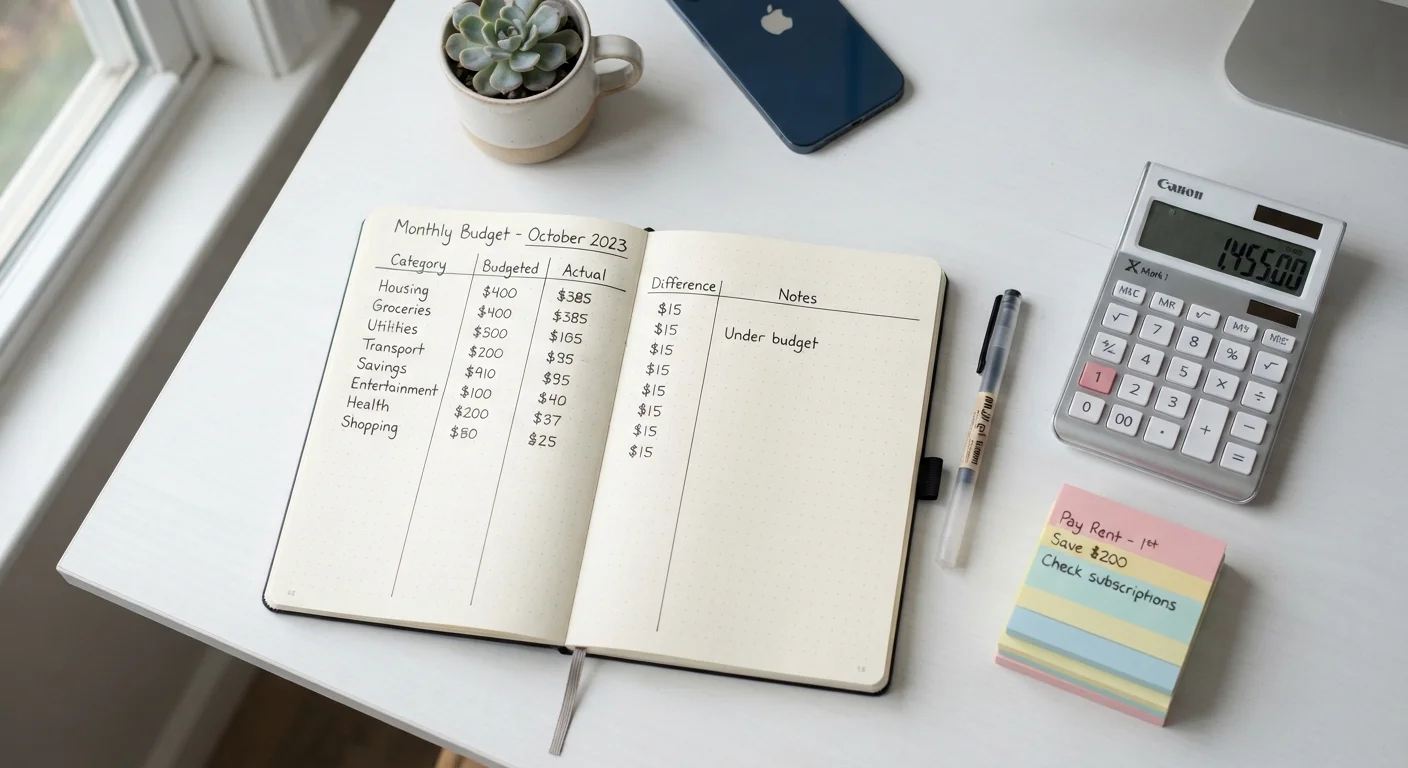


The Real Definition of a Budget
Strip away the anxiety around the word and a budget is straightforward: it is a written plan that matches your income to your expenses and goals. That's it. You decide in advance how much goes toward rent, groceries, transportation, and savings — and how much is available for everything else.
The key word is plan. A budget doesn't lock you in a cage; it hands you a map. Without one, money tends to disappear in ways that are hard to explain at the end of the month. With one, you can see exactly where every dollar is headed.
If you find yourself unsure about terms like "net income" or "discretionary spending" as you get started, a plain-language glossary of budgeting terms can serve as a useful reference.
A Budget Is a Living Document
Your first budget probably won't be perfect — and that's expected. Life changes: income goes up or down, unexpected expenses appear, and priorities shift. A budget is meant to be updated regularly, not set once and forgotten. Treating it as flexible rather than fixed makes it far easier to maintain.
Why Budgets Have a Bad Reputation
Many people associate budgeting with deprivation — cutting out coffee, saying no to friends, and generally making life less enjoyable. That image is misleading. A budget doesn't dictate what you can't have; it shows you what you can have once your priorities are covered.
The discomfort most people feel isn't caused by the budget itself — it's caused by seeing the numbers clearly for the first time. That moment of clarity can feel like bad news, but it's actually useful information. You can only fix a problem you can see.
If you've heard common objections like "I don't earn enough to budget" or "it's too complicated," those are worth examining. Many of those assumptions don't hold up — as the budgeting myths that keep people from starting piece explores in detail.
Rename It If It Helps
If the word "budget" carries negative baggage, try calling it a "spending plan" or "money map" instead. The label doesn't matter — the habit does. Some people find a neutral term makes them more likely to stick with it.
The Basic Structure of Any Budget
Every budget — regardless of how simple or detailed — rests on the same foundation:
- Income: The total money coming in each month after taxes (your take-home pay).
- Fixed expenses: Costs that stay the same each month, like rent or a loan payment.
- Variable expenses: Costs that change month to month, like groceries or gas.
- Savings goals: An amount set aside before or alongside spending — not whatever's left over.
- What remains: Income minus all of the above. This is your real spending flexibility.
The math isn't complicated: if your income exceeds your expenses and savings, you're in balance. If expenses exceed income, the budget shows you exactly where to make adjustments.
~1 in 3
U.S. adults who follow a formal household budget
Surveys by Gallup and similar organisations have consistently found that fewer than half of American households maintain a detailed budget.
$500+
Median monthly spending gap identified after first budgeting
Financial counsellors frequently report that first-time budgeters discover meaningful discrepancies between estimated and actual spending once they track every category.
Once you understand this structure, you're ready to choose a method that suits your habits. Options range from simple percentage rules to detailed zero-based systems — you can explore those in budgeting approaches compared.
What a Budget Actually Does for You
A budget does three practical things that are hard to achieve otherwise:
- It reveals your real financial picture. Most people underestimate what they spend in certain categories until they write it down.
- It creates intentionality. When you allocate money to something — even entertainment — spending it doesn't feel like a failure. It feels like a choice you already made.
- It reduces financial stress over time. Uncertainty about money is a significant source of anxiety. A budget replaces uncertainty with information.
Budgeting does involve trade-offs, and it's worth being honest about that. The honest trade-offs of strict budgeting gives a balanced look at what tighter planning gains — and where it asks for flexibility in return.
When you're ready to put these ideas into practice, the step-by-step walkthrough for your first budget walks you through the process from scratch.
This article is for general informational and educational purposes only and does not constitute personalised financial advice. Consider speaking with a qualified financial professional for guidance specific to your situation.