
Why Food Costs Spiral on the Road
Food is one of travel's biggest variable expenses — and one of the easiest to underestimate. Unlike flights or accommodation, it's a cost that compounds daily across every meal and snack. Many first-time travelers budget loosely for food, assuming they'll "figure it out," and end up overspending simply because hunger makes every decision more impulsive.
This connects directly to the broader budgeting picture. If you haven't already mapped out your full trip costs, our guide on what first-time travelers forget to budget for shows why food, tips, and small daily expenses deserve their own line item.
The good news: food spending is more controllable than almost any other travel cost. With a few deliberate habits, you can eat well, try local cuisine, and stay solidly within budget.
Best Practices for Eating Affordably Without Sacrificing Quality
These approaches work across destinations and travel styles — whether you're in a European city, a Southeast Asian town, or a US road trip. Apply what fits your trip.
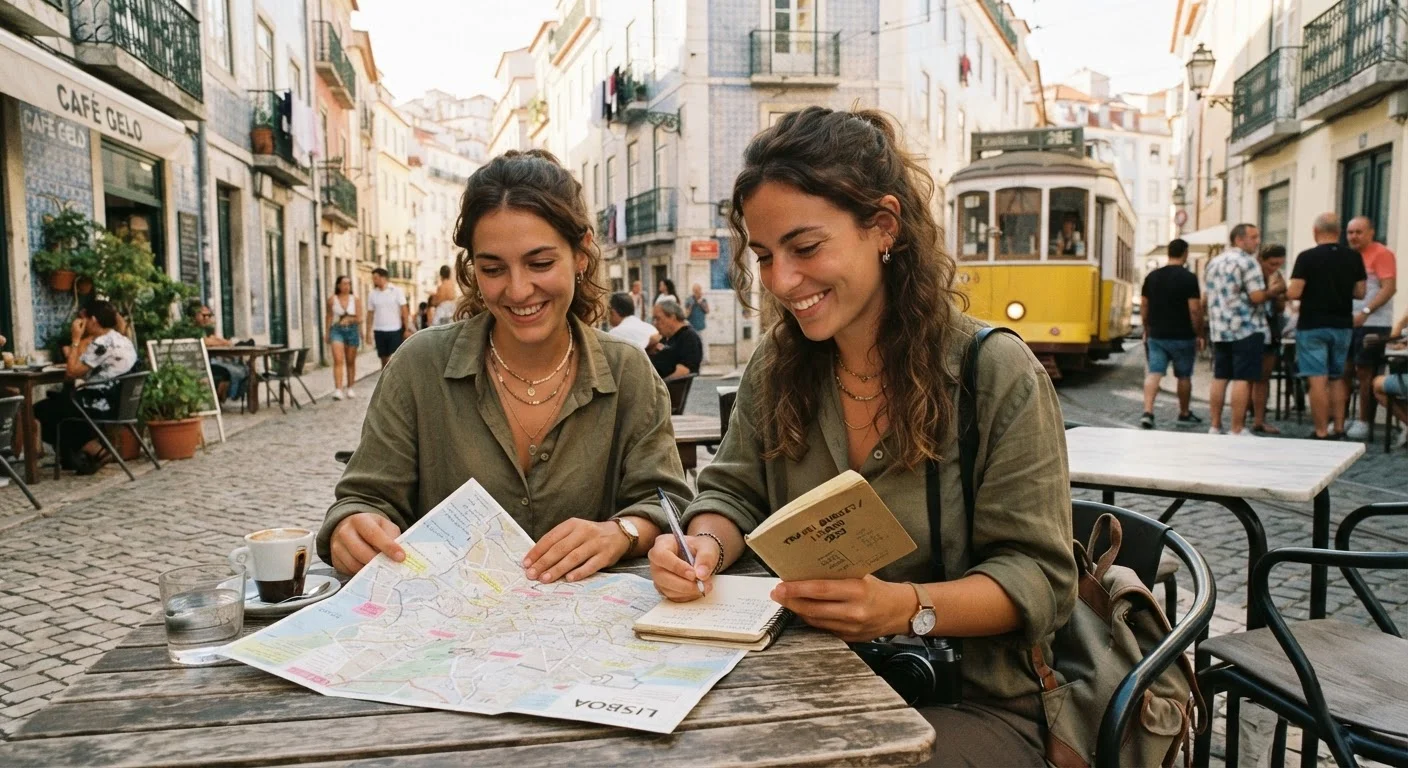
Eat where locals eat, not where menus are translated into English.
Restaurants positioned for tourists typically charge a significant premium for the same quality of food available a few streets away. Local lunch spots, canteens, and neighborhood cafés often serve fresher, more authentic meals at a fraction of the price.
Make lunch your main meal and keep dinner light and inexpensive.
Lunch menus at sit-down restaurants are almost always cheaper than dinner equivalents, even at the same establishment. Flipping the meal hierarchy lets you enjoy quality food at lower prices, then manage dinner costs with market food, bread, or a simple prepared item.
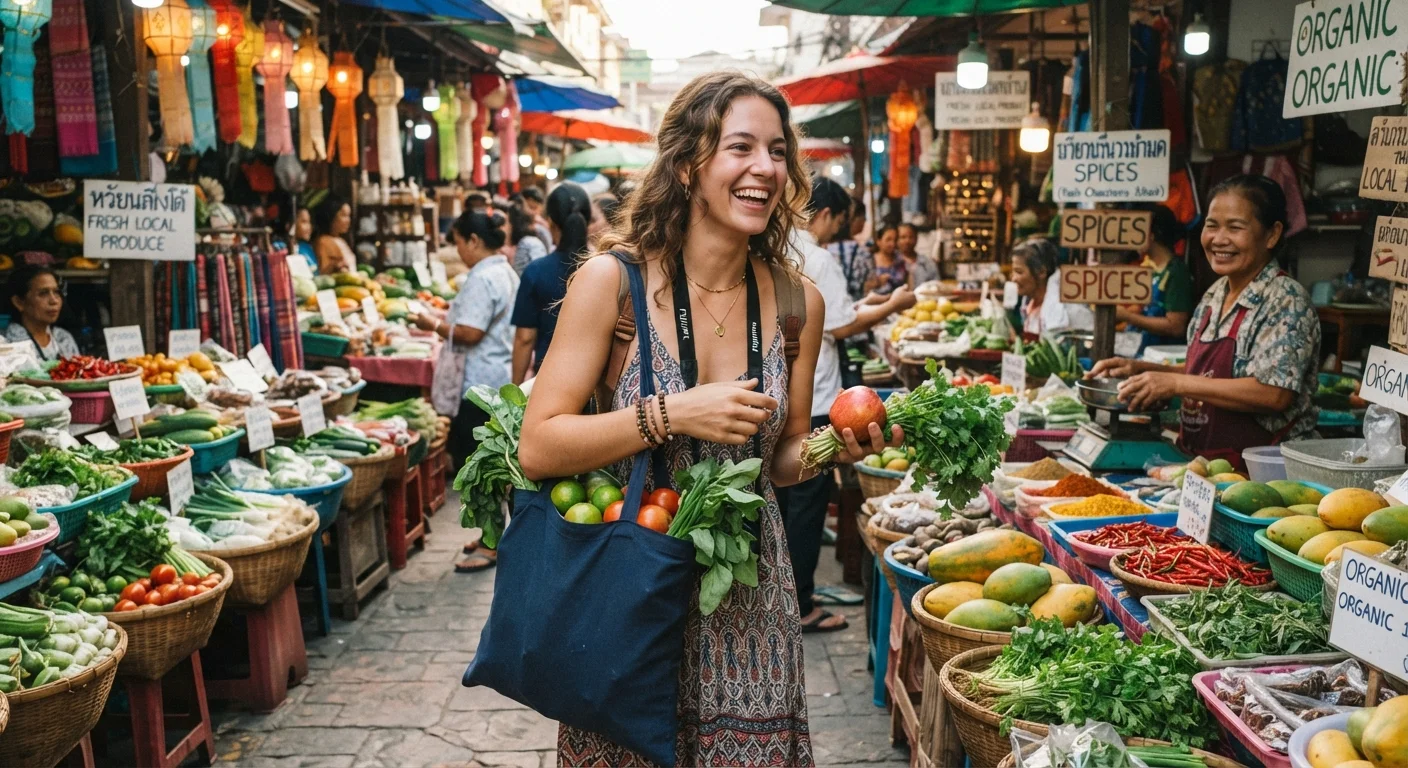
Shop at local markets and grocery stores for at least one meal per day.
Prepared grocery items — rotisserie chicken, deli salads, fresh bread, fruit — deliver real nutrition at low cost and require no cooking. This habit alone can cut daily food spending by 30–50% compared to eating every meal at a restaurant.
Pack portable snacks to avoid hunger-driven impulse spending.
Hunger erodes decision-making. Travelers who skip snacks often end up buying expensive airport food, convenience store items, or fast food simply because they're desperate. A small investment in portable snacks prevents these reactive purchases.
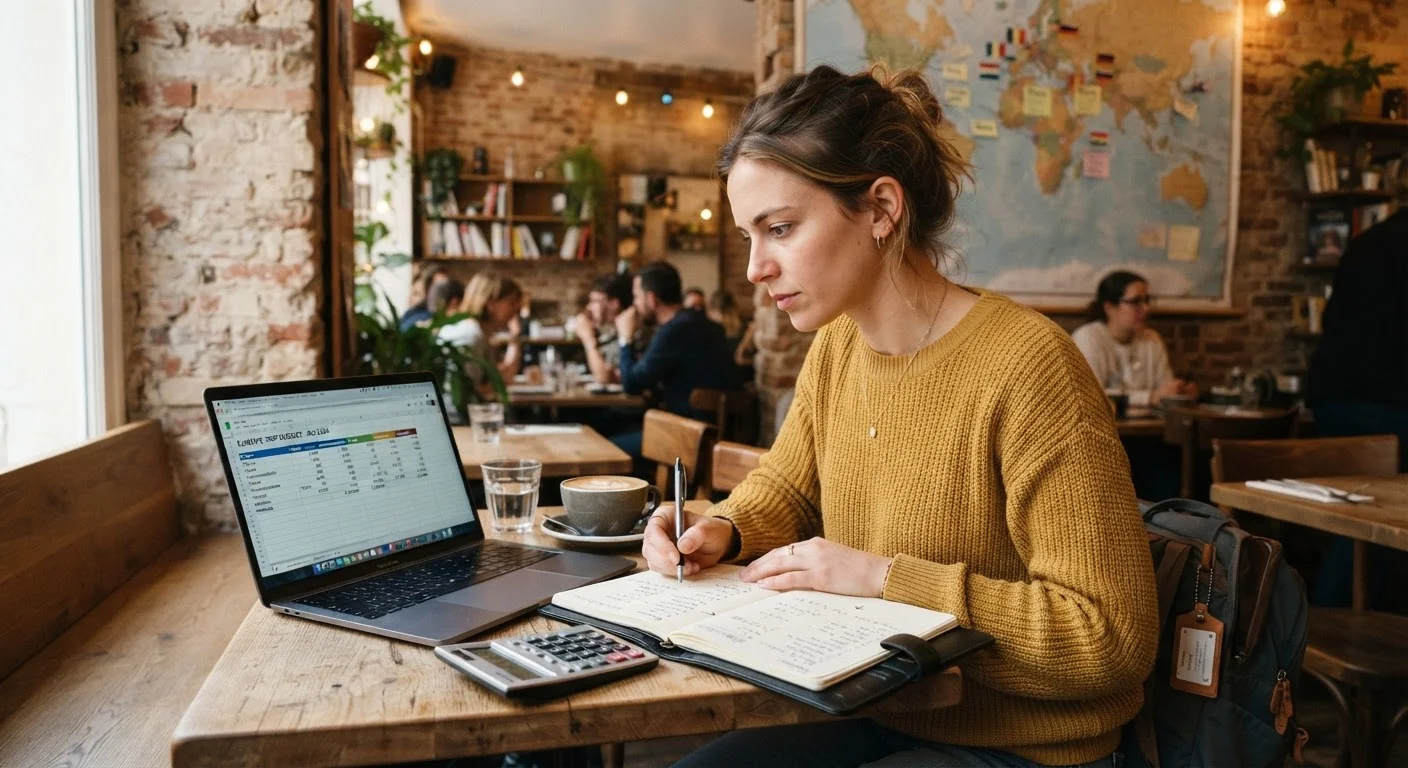
Set a realistic daily food budget and track it in real time.
Without a specific number in mind, food spending drifts upward gradually and invisibly. Tracking — even loosely on a notes app — creates awareness that prevents overspending before it happens, not after.
Ask guesthouse staff or hostel hosts where they personally eat lunch.
Local staff know the neighborhood's affordable, quality spots that don't appear in tourist guides. This single question often uncovers the best-value meal option in the area within 30 seconds.
Quick Actions You Can Take Before and During Your Trip
You don't need to overhaul your entire approach to see real savings. A few targeted habits, adopted early, make a measurable difference by the end of a week on the road.
Use the Menu, Not the Tourist Board
If a restaurant displays its menu in five languages in the window, it's pricing for tourists. Walk one or two blocks off the main drag and look for handwritten daily specials, crowded tables at noon, and menus posted only in the local language. These are reliable signals that you've found a local lunch spot. Your food will almost always be fresher, cheaper, and more interesting.
The Bigger Picture: Food as Part of Your Travel Budget
Smart food habits don't exist in isolation — they're one piece of a broader budget strategy. If you're staying longer in fewer places, for instance, you gain access to grocery stores, local rhythms, and recurring cheap lunch spots that short-hop travelers miss entirely. Our piece on slow travel and saving money explores this in more depth.
30–40%
Of total trip budget spent on food and drink
Travel budget breakdowns commonly show food and beverage accounting for roughly a third of total trip spending among independent travelers.
2–3x
Tourist-area vs. local restaurant price gap
Prices at restaurants in high-traffic tourist zones are commonly two to three times higher than comparable local establishments a short distance away.
For managing what you spend once you're there, understanding payment methods matters too. Currency conversion fees on small food purchases add up fast — our guide on travel cards vs. cash abroad breaks down how to minimize those losses. And if you're still building the fund to travel in the first place, saving strategies for young adults offers practical, low-pressure approaches.
Eating well on the road isn't about deprivation — it's about intention. Knowing where locals eat, carrying a snack, and choosing one sit-down meal a day over three tourist-priced ones can transform both your budget and your experience.