

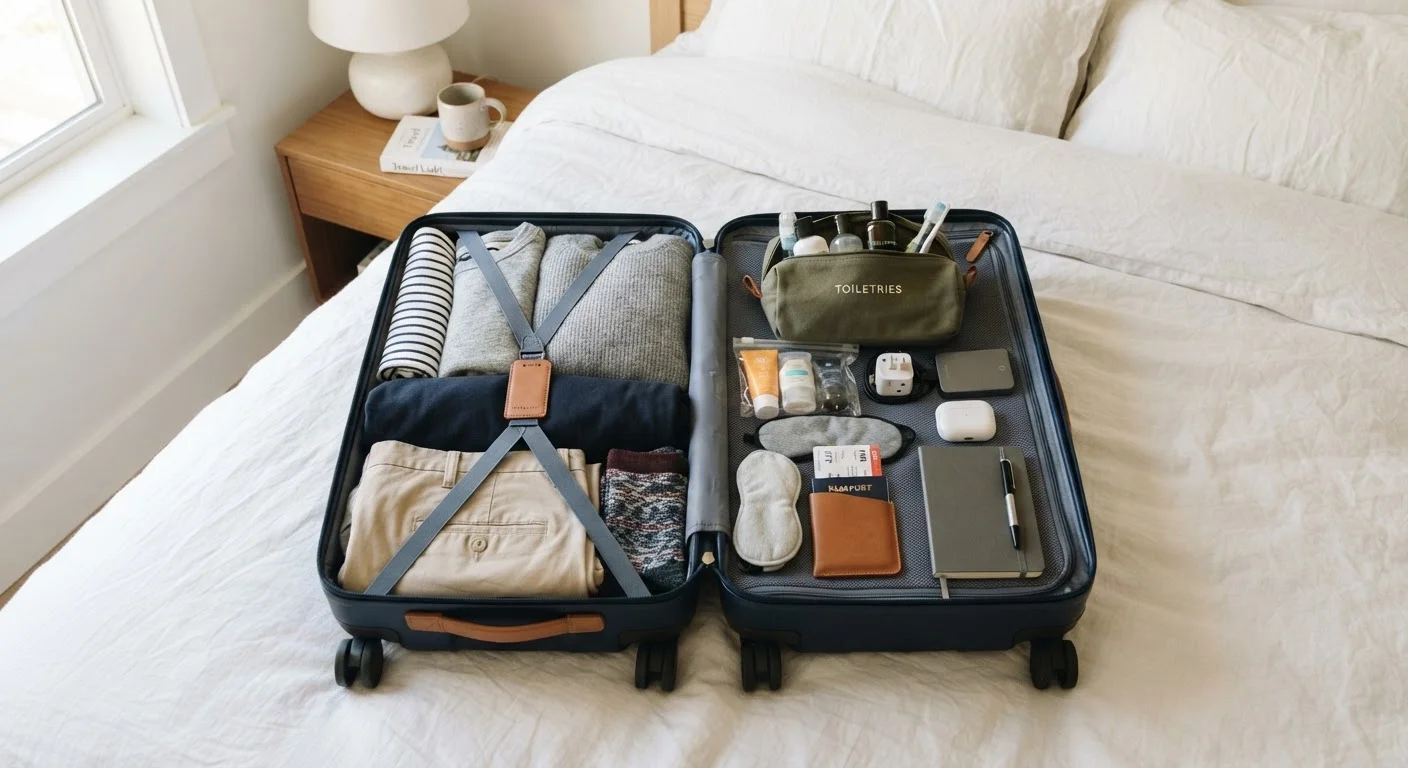
Why Carry-On Only Is a Financial Decision
For budget-conscious travelers, every dollar matters. One of the easiest expenses to eliminate before your trip even begins is the checked baggage fee. On many low-cost carriers operating within and from the US, fees for a checked bag can run $35–$75 per leg — meaning a round trip could cost you $70–$150 just to bring extra clothes you probably won't need.
Beyond the money, skipping checked luggage means you skip the check-in counter, the baggage drop queue, and the carousel wait on arrival. That translates to faster airport experiences and more time doing what you actually came to do. As we cover in our guide to budget airline fees, these add-on charges are where carriers make significant margin — understanding them helps you avoid them entirely.
Carry-on only travel isn't about suffering with too little. It's about being intentional. The steps below will show you how to fit a full week of travel into a single bag without sacrificing comfort or practicality.
What you will need
How to Pack a Carry-On That Actually Works
Follow these steps before every trip to make carry-on travel feel effortless rather than restrictive.
Check Your Airline's Exact Carry-On Dimensions
Before you pack a single item, look up your specific airline's carry-on size and weight policy. Policies differ significantly — a bag that fits in one overhead bin may be gate-checked on another carrier. Most US carriers allow a carry-on of roughly 22 x 14 x 9 inches, but international and budget airlines can be stricter. Find this on the airline's official website under baggage policy.
Build a Destination-Specific Packing List
Write down every activity you plan to do — day trips, dinners, beach days, hikes — and assign clothing only to those activities. Avoid packing for hypothetical scenarios. A common mistake is packing for the trip you imagine rather than the trip you've actually planned. Aim for a maximum of five to six clothing items for a seven-day trip.
Choose Quick-Dry, Wrinkle-Resistant Fabrics
Merino wool and synthetic blends (polyester, nylon) dry quickly after washing, resist odor longer than cotton, and pack down smaller. A merino t-shirt worn two days in a row in warm weather is far more practical than two cotton shirts that take 24 hours to air-dry. Prioritize these materials when choosing what to bring.
Use the Roll-and-Bundle Packing Method
Roll softer items like t-shirts, underwear, and socks tightly to reduce volume. Use the bundle method for wrinkle-prone items: lay them flat and wrap them around a central core (like a packing cube filled with rolled items). Compression packing cubes can also reduce clothing volume by 20–30%, though they don't reduce weight.
Manage Liquids Within the TSA 3-1-1 Rule
For carry-on bags through US airport security, all liquids must be in containers of 3.4 oz (100 ml) or less, placed in a single clear quart-sized bag. This limits how many full-size toiletries you can bring. Use solid toiletries (shampoo bars, solid sunscreen, toothpaste tablets) where possible, and plan to buy consumables like full-size shampoo at your destination if needed.
Wear Your Bulkiest Items on Travel Day
Your heaviest shoes, thickest jacket, and bulkiest layers should be worn on the plane, not packed. This keeps bag weight and volume down without leaving anything behind. A travel day outfit of jeans, a base layer, and a jacket can free up meaningful space in your carry-on for everything else.
Use Your Personal Item Strategically
Most airlines allow a personal item (a smaller bag that fits under the seat) in addition to your carry-on — at no extra charge. A daypack or tote that fits within the personal item limit can hold your laptop, snacks, documents, and in-flight essentials, freeing your carry-on for clothing and gear. Together, these two bags offer more usable storage than many people realize.
What to Do If You're Still Struggling to Fit Everything
If your bag won't close, the problem is almost never the bag — it's the packing list. Go back to your clothing choices before buying a larger bag or paying for checked luggage. Ask yourself: does each item serve at least two purposes? Would it matter if you wore it twice?
Laundry access is your greatest ally on longer trips. Many hostels, Airbnbs, and mid-range hotels offer coin laundry or laundry service for a few dollars. Building one laundry day into a week-long trip means you can travel with three to four days of clothing instead of seven. This pairs especially well with the approach outlined in slow travel strategies, where staying put longer gives you the time and access to do laundry naturally.
For the bigger picture on managing travel costs from the start, see Budget Travel From the Ground Up — it covers how carry-on packing fits into a broader low-cost travel mindset. And if you want to understand how airlines structure fees across the board, the Travel Logistics hub is a practical starting point.
Gate-Check Policies Can Catch You Off Guard
On full flights, airlines may ask passengers to gate-check carry-on bags at no charge — but some budget carriers use this moment to charge a fee if your bag exceeds their personal item dimensions. To avoid this, keep your bag within the personal item size limit whenever possible, or board as early as your ticket allows to secure overhead bin space.