

Why Your Pet's Diet Format Actually Matters
Choosing what to feed a new pet can feel overwhelming. Walk down any pet store aisle and you'll encounter dozens of formats — crunchy kibble, pouches of pâté, freeze-dried raw patties — each claiming to be the healthiest choice. The format of food (not just its ingredients) genuinely affects your pet's hydration, dental health, digestion, and how easy care is for you day to day.
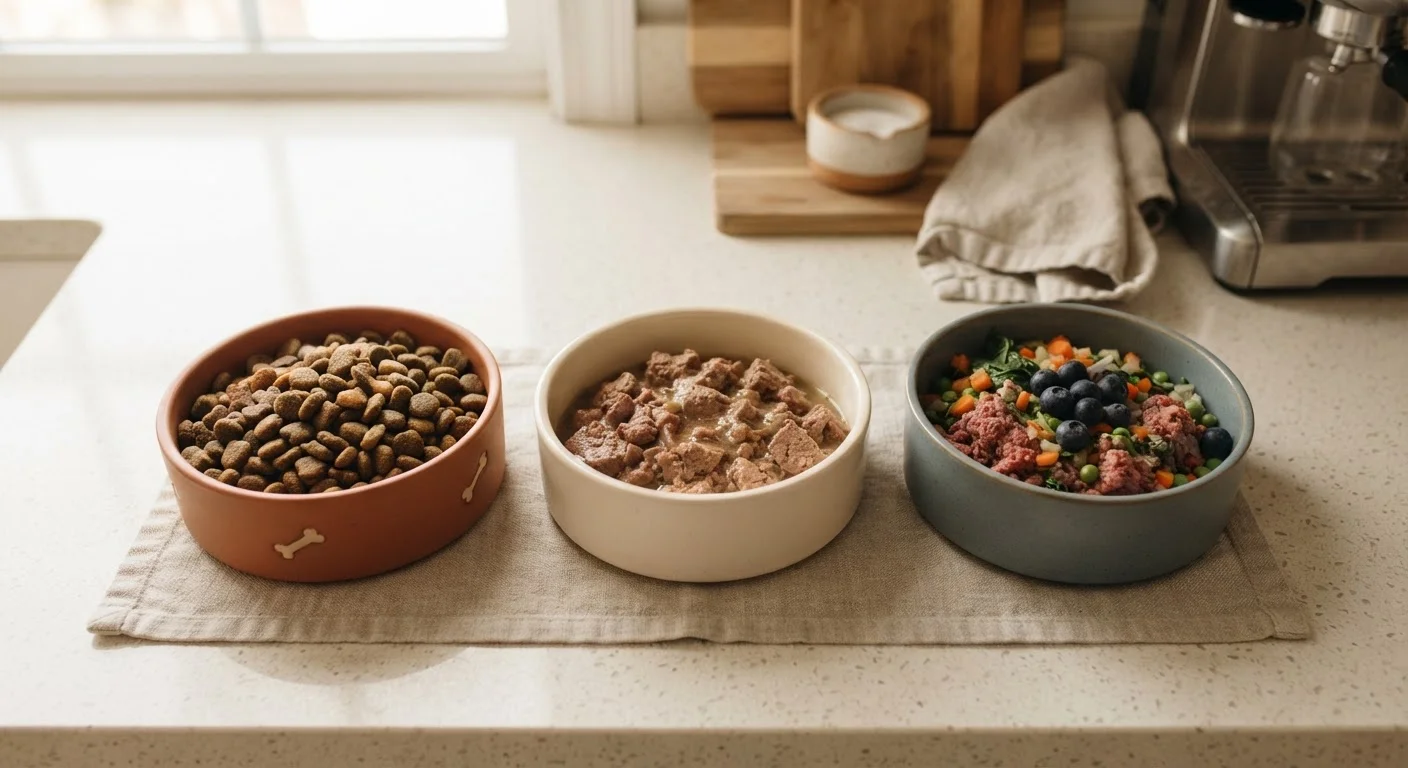
This overview focuses on the three most common diet formats for dogs and cats: dry food (kibble), wet food (canned or pouch), and raw food. Understanding what each involves helps you have a more productive conversation with your veterinarian — the essential first step before changing any pet's diet. For a deeper look at what's actually inside the packaging, see our guide to reading pet food labels.
| Dry Kibble | Wet Food | Raw Diet | |
|---|---|---|---|
| Moisture content | ~10% | 70–80% | ~65–70% |
| Cost per serving | Low to moderate | Moderate to high | High (varies widely) |
| Convenience | Very high | Moderate | Low — requires prep |
| Shelf life (unopened) | 12–18 months | 2–5 years (canned) | Months (frozen) |
| Food safety risk | Low | Low | Higher — bacterial risk |
| Nutritional completeness | High if AAFCO-approved | High if AAFCO-approved | Varies — DIY risk |
| Dental benefit | Moderate (chewing action) | Minimal | Possible (raw bones) |
| Best suited for | Most healthy pets | Pets needing hydration | Experienced owners only |
Dry Food: Convenient but Not All Equal
Dry kibble is the most widely used pet food format in the US, and for practical reasons: it's shelf-stable, easy to measure, typically more affordable per serving, and simple to store. Many formulas are also designed to help reduce tartar buildup through the mechanical action of chewing, though this benefit varies by product and shouldn't replace dental care.
The downside is significant variability in quality. Ingredient lists can range from whole named proteins (like chicken or salmon) to vague by-products and heavy use of corn or wheat as fillers. Moisture content is also very low — typically around 10% — which means pets eating only dry food may not get adequate hydration, particularly cats, who have naturally low thirst drives.
Look for AAFCO-Approved Formulas
When evaluating any dry or wet food, check the label for a statement that the product meets AAFCO (Association of American Feed Control Officials) nutritional standards. This indicates the food has been formulated or tested to meet minimum nutritional requirements for your pet's life stage. It's one of the most reliable baseline checks available to new owners.
Cost is another factor worth planning for. See our breakdown of the real cost of pet ownership to understand how food fits into the bigger financial picture.
Wet Food: Hydration and Palatability
Wet food — sold in cans, trays, or pouches — contains 70–80% moisture, making it a meaningful source of hydration alongside a water bowl. This is particularly valuable for cats, senior pets, or animals managing kidney disease or urinary tract conditions. Vets often recommend wet food as part of management for these health concerns, though individual guidance always depends on the specific animal.
Wet food is also highly palatable, which helps picky eaters or pets recovering from illness who have lost their appetite. The trade-offs include higher cost per calorie compared to kibble, shorter shelf life once opened (typically refrigerated for one to two days), and the need for more frequent feeding routines. Once you establish a rhythm, though, it's manageable — pairing wet food with a consistent schedule can help. Our article on why feeding schedules matter explains how routine affects digestion and behavior.
Raw Diets: Potential Benefits and Real Risks
Raw feeding — sometimes called BARF (Biologically Appropriate Raw Food) — involves offering uncooked meat, bones, and organs, often with fruits or vegetables added. Proponents argue that minimally processed food more closely resembles what animals evolved to eat, and some owners report improvements in coat quality and stool consistency. However, the scientific evidence for raw diets outperforming high-quality commercial alternatives is currently limited and mixed.
The risks are concrete and well-documented. Raw meat carries bacteria such as Salmonella and Listeria, which can sicken both pets and the people handling the food — a particular concern in households with young children, elderly individuals, or anyone immunocompromised. Homemade raw meals also risk nutritional imbalances if not carefully formulated; calcium-to-phosphorus ratios, for example, are critical for bone health and easy to get wrong without expert guidance. Major veterinary organizations, including the American Veterinary Medical Association, advise caution with raw diets specifically due to these pathogen risks.
Raw Diets Carry Real Contamination Risks
Handling raw meat for pet food carries the same food safety risks as handling it for human cooking — and then some, because pets can shed bacteria through their saliva and feces after eating. Always wash hands, surfaces, and utensils thoroughly. If anyone in your household is pregnant, very young, elderly, or has a compromised immune system, discuss raw feeding risks explicitly with both your veterinarian and your physician before starting.
If you're interested in raw feeding, consult a veterinary nutritionist rather than relying solely on online forums. The pet health and vet hub is a useful starting point for understanding when professional guidance is essential.
How to Decide What's Right for Your Pet
There's no universal answer, but a few practical questions help narrow things down. First, consider your pet's life stage and health status — kittens, puppies, seniors, and pets with chronic conditions often have specific nutritional needs that a format choice should support. Second, be honest about your budget and schedule; a diet you can't sustain consistently isn't the right choice no matter how nutritionally ideal it seems in theory.
Many owners land on a mixed approach: dry food as the daily staple with wet food added a few times a week for hydration and variety. This balances cost, convenience, and palatability for most healthy adult pets. Whatever you choose, transition slowly over seven to ten days by gradually mixing the new food with the old — sudden diet changes commonly cause digestive upset.
Your veterinarian is the most important resource in this decision. They can factor in your specific pet's breed, weight, age, and medical history in a way no general guide can. Think of this overview as preparation for that conversation, not a substitute for it.
This article is for general informational purposes only and does not constitute veterinary or medical advice. Always consult a licensed veterinarian before making changes to your pet's diet, particularly if your pet has existing health conditions.