Household hazards for pets are easy to overlook. This room-by-room guide covers what to move, secure, or remove before your pet arrives.
Key Takeaways
Most household pet hazards are inexpensive and quick to fix before your animal arrives.
Common foods, plants, and cleaning products can be toxic to cats, dogs, and other pets.
Unsecured cords, small gaps, and open water sources are among the most overlooked risks.
A room-by-room walk-through is the most reliable way to catch hazards you might otherwise miss.
Pet-proofing is an ongoing process — revisit as your pet grows or your home changes.
Why Pet-Proofing Matters Before Day One
Bringing a new pet home is exciting — but your living space was designed for humans, not animals. Curious noses, chewing habits, and the instinct to climb or squeeze into tight spaces mean that hazards you'd never notice can seriously injure a pet within the first hours of arrival.
The good news: most risks are easy to eliminate with a focused walk-through before your pet steps through the door. Use this checklist room by room, and pair it with our guide to your pet's first week at home to feel genuinely prepared.
Not every item below applies to every species — a goldfish doesn't need cabinet locks — so filter the list for your specific animal. If you haven't chosen a pet yet, our choosing-a-pet hub can help you match an animal to your actual lifestyle and space.
Toxic Plants Are Easy to Overlook
Many common houseplants and garden varieties are seriously toxic to cats, dogs, or both. Lilies — including Easter, tiger, and daylilies — are particularly dangerous and can cause acute kidney failure in cats after even minor exposure. Before your pet arrives, cross-reference every plant in your home and yard against the ASPCA Animal Poison Control Center's plant database. If you're unsure about a plant, move it outside the pet's reach until you can confirm it is safe.
Your Room-by-Room Safety Checklist
Work through each space methodically. Get down to your pet's eye level in each room — you'll spot gaps, wires, and tempting objects that are invisible from standing height.
Kitchen & Dining Area
Store all food — especially grapes, raisins, onions, xylitol-sweetened products, chocolate, and macadamia nuts — in closed, latched cabinets or the refrigerator.Must
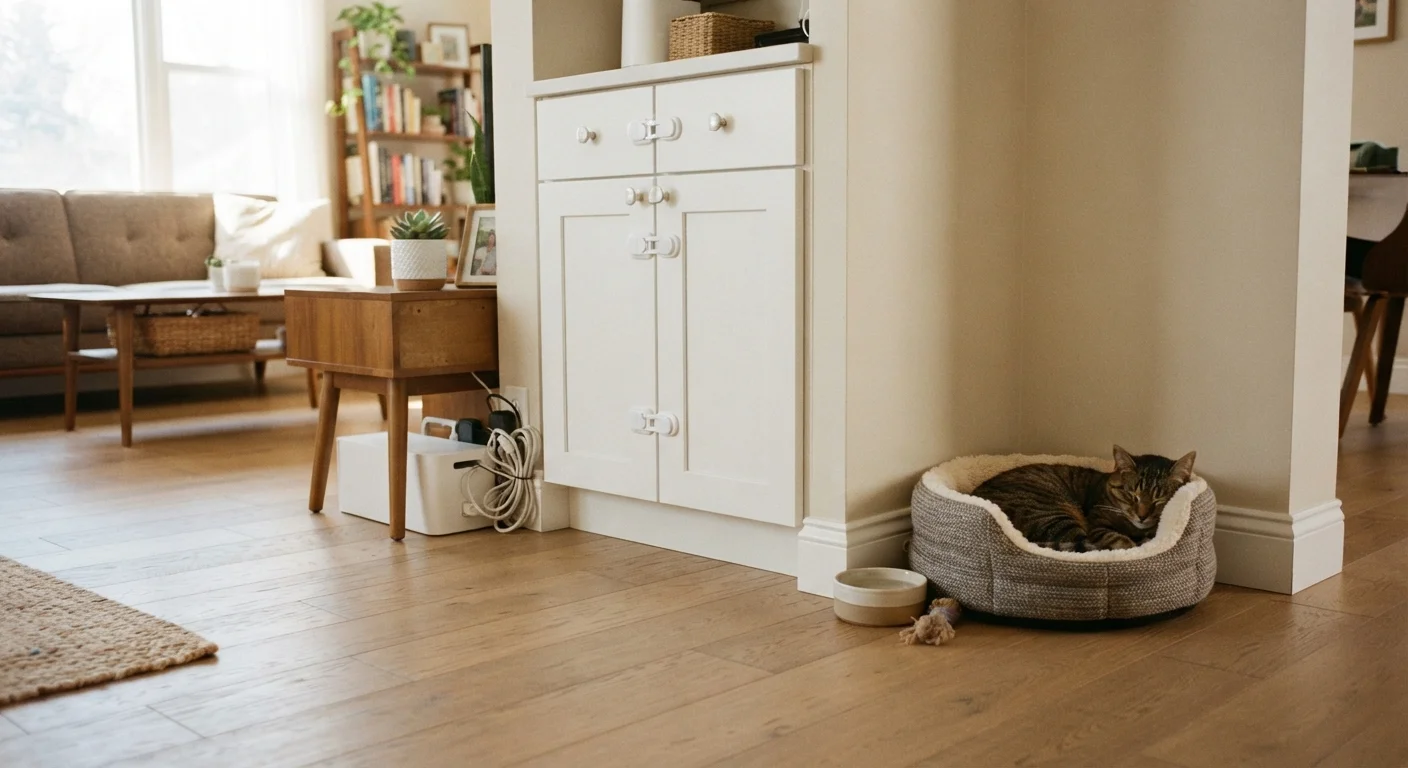
Move cleaning products, dishwasher pods, and trash bags to a high shelf or install child-safety latches on under-sink cabinets.Must
Secure or remove the trash can with a pet-proof lid or keep it inside a latched cabinet.Must
Never leave standing water in the sink unattended if you have a small pet; small animals can drown in surprisingly shallow water.Should
Keep stove knobs covered or removed when not in use to prevent accidental activation by larger dogs.Nice to have
Living Room & Common Areas
Bundle or conceal all electrical cords using cord covers, cable boxes, or bitter-spray deterrents to prevent chewing.Must
Remove or relocate toxic houseplants — including lilies (fatal to cats), pothos, sago palm, and philodendron — out of reach or out of the home entirely.Must
Check for small gaps behind furniture, appliances, and along baseboards where a small pet could become trapped or injured.Should
Secure heavy bookshelves, TVs, and tall furniture to the wall to prevent tipping if a pet climbs.Should
Pick up small objects — rubber bands, paper clips, coins, buttons — that could be swallowed.Must
Bathroom & Laundry
Keep toilet lids closed at all times — a falling risk for small pets and a source of cleaning-chemical exposure.Must
Store medications, vitamins, and supplements — including human prescriptions — in a latched medicine cabinet, never on counters.Must
Check the inside of washing machines and dryers before each use; cats and small animals seek warm, enclosed spaces.Must
Move razors, cotton swabs, hair ties, and dental floss out of reach; these are swallowing hazards.Should
Bedrooms & Hallways
Decide in advance which rooms are off-limits and install door stoppers or gates before your pet arrives — consistency from day one prevents confusion.Should
Remove or secure loose window screens; cats especially can push through standard screens from upper-floor windows.Must
Store shoes, socks, and laundry in closed hampers — fabric items are a common chewing and swallowing hazard.Should
Outdoor & Garage Spaces
Check fencing for gaps, loose boards, or digging opportunities at the base before allowing a dog or cat outdoor access.Must
Store antifreeze, pesticides, fertilizers, and motor oil on high shelves or in locked cabinets — antifreeze in particular is highly toxic and appealing to animals due to its sweet taste.Must
Identify and remove or fence off toxic outdoor plants such as azalea, oleander, and yew from areas your pet can access.Should
Install a self-closing latch on any gate so it cannot be left open accidentally.Nice to have
Once you've completed the checklist, do one final lap with fresh eyes, or ask a friend to spot anything you've normalized. For a broader look at the everyday care habits that keep pets healthy long-term, see our new pet owner's health guide.
Tools That Make Pet-Proofing Easier
You don't need to buy a lot, but a few basic supplies make the job faster and more effective.
Required
Child-safety cabinet latches
Prevent pets from nosing open low cabinets containing cleaning products, food, or trash.
Required
Cord covers or cable management sleeves
Protect electrical cords from chewing, reducing shock and fire risk.
Required
Baby gates or pet gates
Block off stairways, rooms, or kitchen areas your pet shouldn't access unsupervised.
Required
Pet-proof trash can
Prevents tipping or lid removal by curious dogs and cats.
Optional
Bitter apple or deterrent spray
Discourages chewing on furniture legs, cords, and baseboards.
Optional
Furniture anchoring straps
Secure tall bookshelves and appliances to walls to prevent toppling if a pet climbs.
Post your veterinarian's number and the ASPCA Animal Poison Control Center hotline (a 24-hour resource) somewhere visible — and store both in your phone — before your pet comes home. In a poisoning or injury emergency, seconds matter and searching for contact information costs precious time. Your vet can also advise you on what a pet-specific first aid kit should contain for your species and household setup.
Pets & Animals Editorial Team is the collective byline for our editorial team and contributor network. Articles published under this byline or an editorial pen name are researched, written, and reviewed according to our editorial standards for clarity, consistency, and independence before publication.
The content provided on our blog site traverses numerous categories, offering readers valuable and practical information. Readers can use the editorial team’s research and data to gain more insights into their topics of interest. However, they are requested not to treat the articles as conclusive. The website team cannot be held responsible for differences in data or inaccuracies found across other platforms. Please also note that the site might also miss out on various schemes and offers available that the readers may find more beneficial than the ones we cover.