

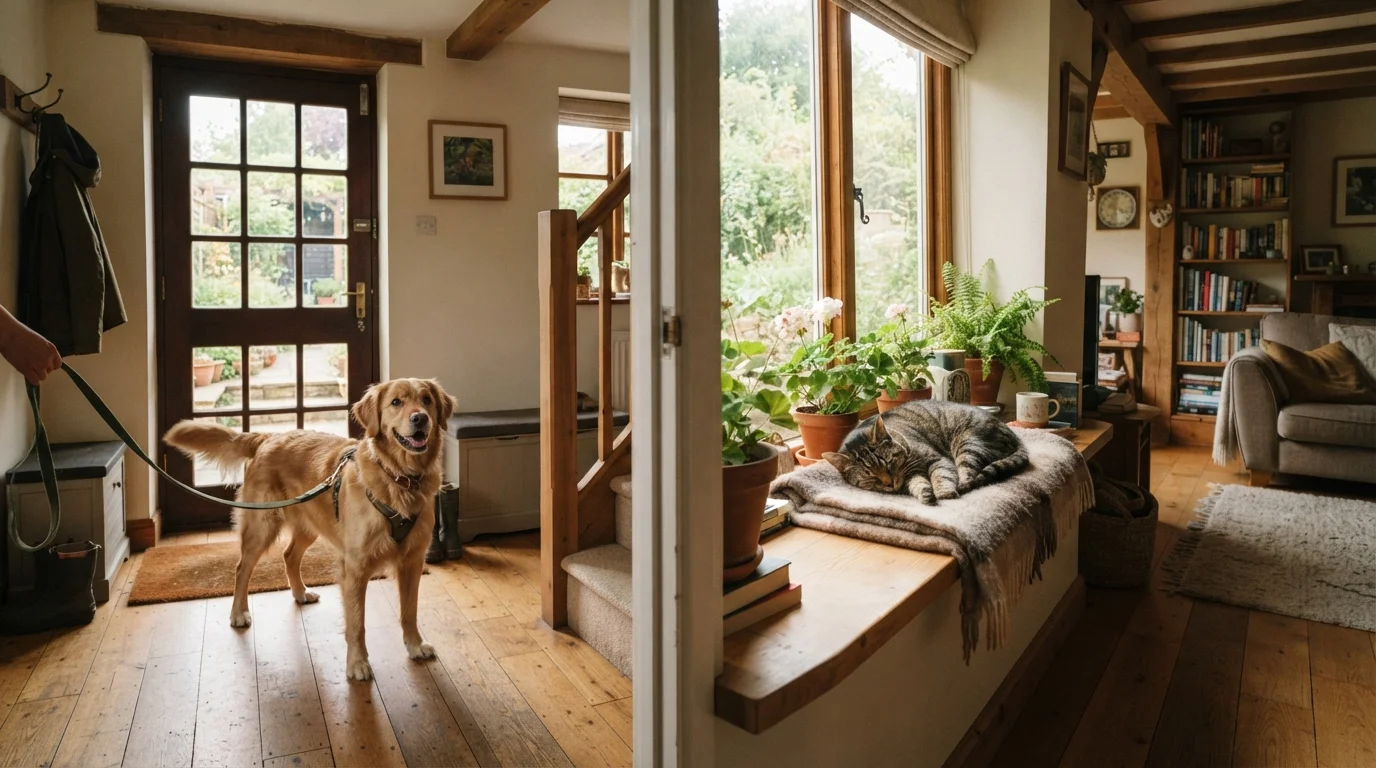
What a Typical Day Looks Like with Each
The single biggest difference between dogs and cats isn't personality — it's time commitment. Dogs need to go outside multiple times a day, every day, regardless of weather or your schedule. Most dogs require at least two to three walks daily, plus dedicated play and training time. Skip this, and you're likely to see destructive behavior or anxiety.
Cats, by contrast, use a litter box independently and entertain themselves for large portions of the day. A morning feeding, a midday check-in, and an evening play session is a realistic baseline for most adult cats. That doesn't mean they're low-effort — litter boxes need daily scooping, and cats still need social interaction — but the structure they impose on your day is significantly lighter.
If your schedule is unpredictable, a dog will require either a dog walker, doggy daycare, or a trusted person who can step in. That's an added logistical and financial layer worth factoring in early. See our full breakdown of pet ownership costs for a realistic picture of what these add-ons look like over time.
| Criterion | Dogs | Cats |
|---|---|---|
| Daily time commitment | 2–4 hours (walks, play, training) | 30–60 minutes (feeding, play, grooming) |
| Can be left alone (work day) | Generally 4–6 hours max | Most adapt to 8–10 hours |
| Space requirement | Moderate to high; yard helpful | Low; adapts well to apartments |
| Average annual cost (est.) | $1,500–$4,000+ | $700–$2,000 |
| Training required | Significant; essential for safety | Light; litter training is intuitive |
| Affection style | Active, consistent, demonstrative | Selective, subtle, on their terms |
| Outdoor access needed | Yes, multiple times daily | Optional; indoor-only is common |
Space, Housing, and Lifestyle Fit
Where you live matters more than most first-time owners expect. Dogs — especially medium to large breeds — need room to move and regular outdoor access. Many apartment buildings allow small dogs, but a 400-square-foot studio with no yard is a genuinely difficult environment for most dogs to thrive in.
Cats are significantly more adaptable to compact spaces. A one-bedroom apartment can work well for a cat, particularly if you provide vertical enrichment like cat trees or shelving. Indoor cats do need mental stimulation — puzzle feeders, rotating toys, and windows with a view matter more than square footage.
Renters face an additional hurdle: pet policies. Dogs often trigger higher deposits or breed restrictions. Cats may also be restricted, but the rules tend to be less complex. Before adopting either, it's worth reading our guide on navigating pet policies as a renter. And if you're still deciding whether your living situation is the right fit, matching your living situation to the right pet walks you through the key questions.
69M
US households with dogs
According to the American Pet Products Association's National Pet Owners Survey, approximately 69 million US households owned a dog.
45.3M
US households with cats
The same APPA survey estimates around 45.3 million US households include at least one cat, making cats the second most common pet.
$1,270
Avg. annual dog vet spending
APPA data indicates dog owners spend significantly more on veterinary care annually than cat owners on average.
Companionship Styles: What Bonding Actually Feels Like
Both dogs and cats form real, meaningful bonds with their owners — but the texture of that bond is different. Dogs are generally more overtly affectionate. They follow you between rooms, greet you at the door, and actively seek your attention. For many people, that consistent presence is exactly what they want from a pet.
Cats tend to be more selective. They'll often choose when to be social, curl up next to you on their own schedule, and show affection in subtler ways — slow blinks, head bumps, or simply staying in the same room. This isn't coldness; it's a different communication style. Many cat owners find this dynamic deeply satisfying once they understand it.
Neither style is objectively better — it comes down to what kind of relationship you're looking for. If you want a pet that actively engages with your routine, a dog is likely the better match. If you want company that respects your space, a cat may suit you more naturally. For a broader look at whether pet ownership is right for you at all, The Case for Getting a Pet — and the Case Against It offers an honest, balanced perspective.
Indoor vs. Outdoor: Another Layer to Consider
Whether your pet lives primarily indoors or has outdoor access is a separate — but closely related — decision. Outdoor cats face different health and safety risks than indoor cats, and the same applies to dogs with unsupervised yard access. Our article on indoor vs. outdoor pets covers these trade-offs in detail, and is worth reading before you finalize your setup.