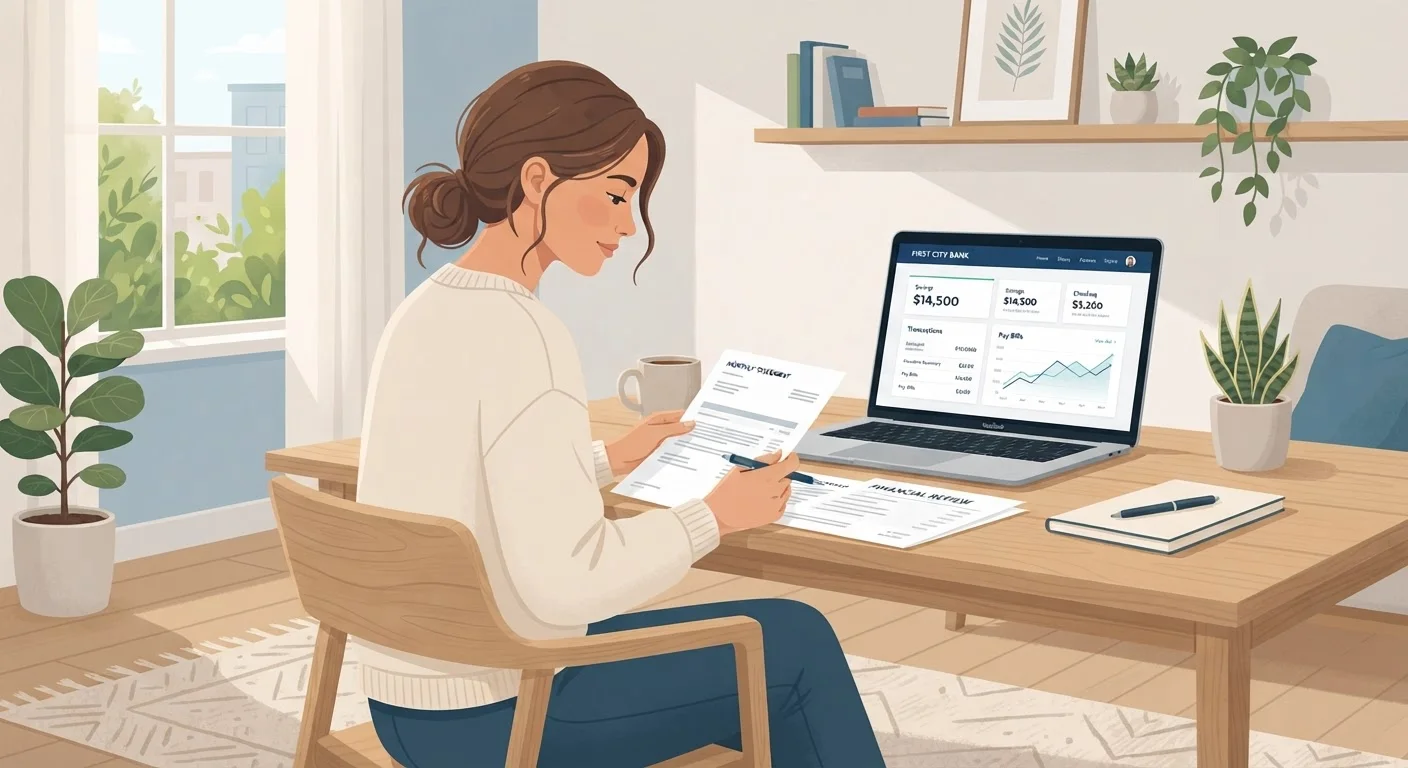
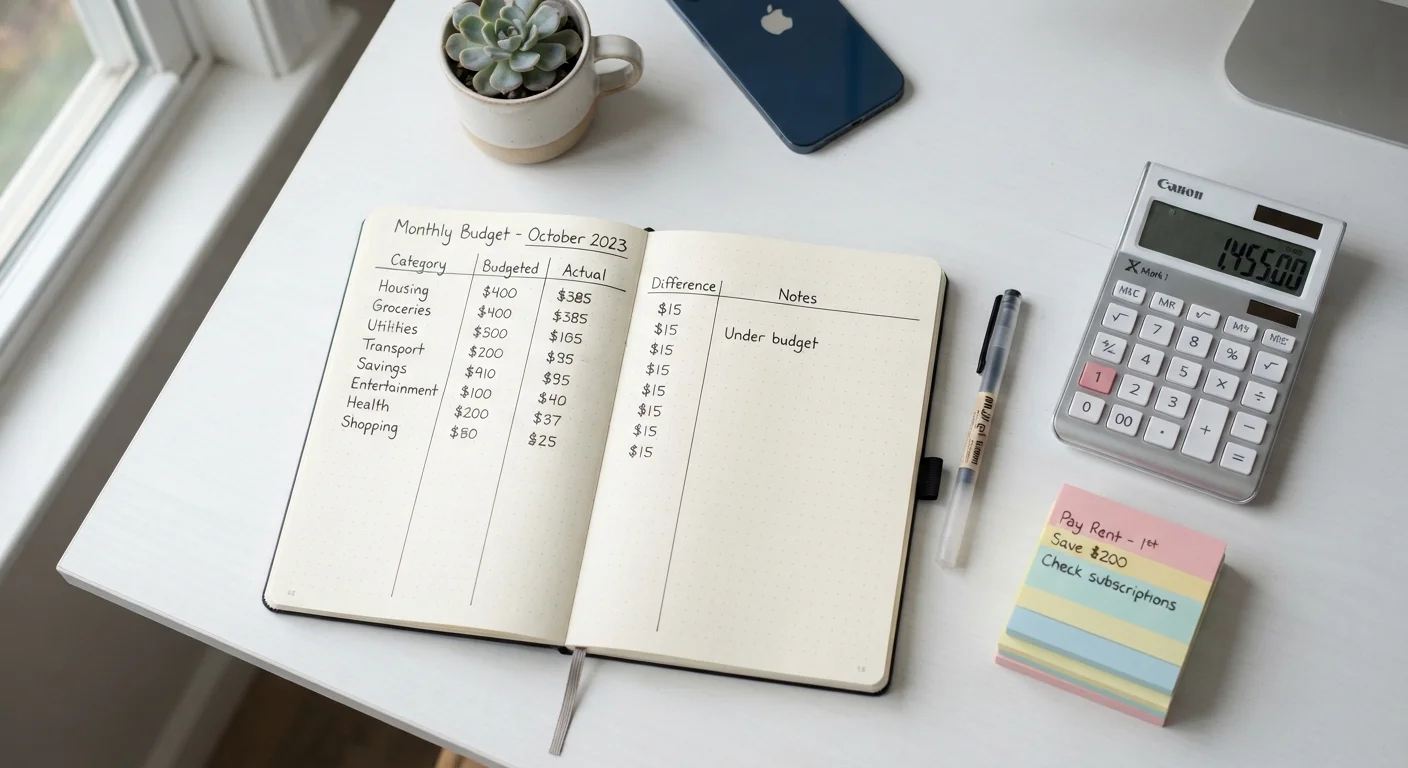
Before opening an account, there are key details worth verifying — from deposit insurance to fee structures. Use this checklist to stay informed.
Key Takeaways
FDIC or NCUA deposit insurance protects your money up to $250,000 if a bank fails.
Monthly maintenance fees and minimum balance requirements can quietly drain your account.
Interest rates on savings accounts vary widely — even among insured institutions.
Checking a bank's fee schedule before opening is one of the most practical steps you can take.
Online banks and credit unions often operate differently from traditional banks — worth understanding the differences.
Why This Checklist Matters Before You Open an Account
Opening a bank account feels straightforward — fill out a form, deposit some money, done. But not all accounts, or all banks, are the same. Some charge fees that quietly eat into your balance. Others offer little to no interest on savings. A few aren't even backed by federal deposit insurance, which is a detail that matters a lot if the institution ever runs into trouble.
This checklist is designed for anyone who's new to banking or switching to a new institution. Working through it takes less than an hour and could save you real money and frustration over time. For a broader introduction to how accounts work, see everything you need to know before opening your first bank account.
Deposit Protection
Confirm the institution is FDIC-insured (banks) or NCUA-insured (credit unions), which protects deposits up to $250,000 per depositor if the institution fails.Must
Look up the institution using the FDIC's BankFind tool or NCUA's Credit Union Locator — don't rely solely on the institution's own claims.Must
Check whether you hold accounts at multiple institutions to understand how coverage limits apply across all of them.Should
Fees and Minimums
Request or download the full fee schedule before signing up — look specifically for monthly maintenance fees, overdraft fees, and out-of-network ATM charges.Must
Identify any minimum opening deposit required and confirm you can meet it without stretching your budget.Must
Find out if there is a minimum daily or monthly balance required to avoid maintenance fees, and assess whether you can consistently maintain it.Must
Check for fees tied to paper statements, wire transfers, or account inactivity, which are easy to overlook.Should
Interest and Account Terms
Check the Annual Percentage Yield (APY) — the standardised rate that reflects what your savings will actually earn over a year — and compare it across a few institutions.Should
Confirm whether the interest rate is variable (can change) or fixed, so you understand what to expect going forward.Should
Review any transaction limits on savings accounts, such as caps on the number of withdrawals per month, and understand what happens if you exceed them.Should
Access and Convenience
Verify the size and location of the ATM network — confirm whether there are free-to-use ATMs near where you live, work, or study.Must
Evaluate the online and mobile banking features — check that you can deposit checks, transfer funds, and view statements digitally.Should
Test the customer service availability by checking hours, contact options (phone, chat, in-branch), and user reviews of support responsiveness.Nice to have
Institution Type and Fit
Understand whether you're looking at a traditional bank, an online-only bank, or a credit union — each has different structures, pros, and trade-offs worth knowing.Should
If considering a credit union, verify your eligibility to join based on their membership criteria (employer, location, community group, etc.).Must
Review the institution's policy on overdraft protection — understand whether it's opt-in and what fees or linked-account options are available.Should
Look for any account features that support your specific goals, such as automatic savings tools, round-up programs, or sub-account options.Nice to have
What to Do With What You Find
Once you've worked through the checklist, you'll likely have a clearer picture of which institution fits your situation. If a bank can't clearly answer questions about its fee structure or insurance status, that's useful information on its own.
Watch Out for 'No-Fee' Marketing Language
Some accounts are advertised as fee-free but still charge for specific actions like paper statements, wire transfers, or falling below a balance threshold. Always read the full account agreement and fee disclosure — not just the headline offer — before signing up. If the fee schedule is hard to find or written in confusing language, ask a representative to walk you through it.
Keep in mind that this checklist is general financial education — it's not a substitute for personalised financial advice. Your specific needs, income, and goals affect which type of account makes the most sense for you. If you're unsure, a non-profit credit counsellor or a fee-only financial adviser can help you think it through.
Once you've chosen an institution, the next step is the actual account-opening process. Our step-by-step account-opening walkthrough covers exactly what documents you'll need and what to expect. And if you want the full picture of how banking fits into your financial foundation, the banking and savings complete overview is a good next read.
Deposit Insurance Has Limits — Know Yours
FDIC and NCUA insurance each cover up to $250,000 per depositor, per institution, per ownership category. If your total deposits at a single institution exceed that threshold, amounts above the limit are not federally protected. Most people starting out won't approach this limit, but it's worth understanding. For a plain-language explanation of how deposit insurance works, see our article on FDIC and NCUA deposit protection.
Money Basics Editorial Team is the collective byline for our editorial team and contributor network. Articles published under this byline or an editorial pen name are researched, written, and reviewed according to our editorial standards for clarity, consistency, and independence before publication.
The content provided on our blog site traverses numerous categories, offering readers valuable and practical information. Readers can use the editorial team’s research and data to gain more insights into their topics of interest. However, they are requested not to treat the articles as conclusive. The website team cannot be held responsible for differences in data or inaccuracies found across other platforms. Please also note that the site might also miss out on various schemes and offers available that the readers may find more beneficial than the ones we cover.