
What a Savings Account Actually Does
A savings account is a deposit account held at a bank or credit union that earns interest over time. Unlike a checking account, it is designed for money you don't need to spend immediately. Banks pay you a small percentage — expressed as an APY (Annual Percentage Yield) — for keeping funds there, and your deposits are insured by the FDIC (for banks) or NCUA (for credit unions) up to $250,000 per depositor.
That basic structure makes a savings account one of the most accessible entry points into personal finance. You don't need investing knowledge or a large sum to open one. But like any financial tool, it has a specific job — and it doesn't do every job well.
If you're not sure how savings accounts differ from checking accounts day-to-day, see Checking vs. Savings: What Each Account Actually Does.
The Real Advantages
Savings accounts offer a set of genuine benefits that make them worth considering for most people, regardless of income level.
Federally insured up to $250,000
FDIC insurance (for banks) and NCUA insurance (for credit unions) protect your deposits up to $250,000 per depositor per institution, making savings accounts one of the safest places to store money.
Earns interest without any effort
Your balance earns a percentage return simply by sitting in the account. While rates vary, this is passive growth that requires no active management on your part.
Easy to open with low or no minimums
Many savings accounts can be opened online in minutes with little or no opening deposit, removing barriers for people who are just starting to save.
Keeps savings separate from spending money
Having a dedicated account for savings creates a psychological and practical boundary that helps prevent money from being spent impulsively.
Liquid — funds remain accessible when needed
Unlike some investments or CDs, you can generally withdraw from a savings account when you need the money, making it practical for emergencies.
The federal insurance protection alone is a significant reason to use a savings account over keeping cash at home. And the separation from your everyday spending account creates a mild but effective barrier — money in savings feels distinct from money available to spend, which can support better habits. For more on building those habits, the Budgeting Basics hub is a helpful starting point.
Where Savings Accounts Fall Short
Understanding the limitations is just as important as knowing the benefits. A savings account is not a growth vehicle — and treating it like one can leave your money losing real purchasing power over time.
Interest rates are often very low
Traditional savings accounts at large banks frequently offer APYs well below 1%, meaning your money grows slowly — sometimes slower than the rate of inflation.
Inflation can erode real purchasing power
If inflation outpaces your APY, your balance may grow in dollar terms while actually buying less over time — a hidden cost of keeping too much in low-yield savings.
Withdrawal limits may apply
Some institutions limit the number of transfers or withdrawals per month. Exceeding those limits can trigger fees or account restrictions depending on the bank's policies.
Fees can offset interest earned
Monthly maintenance fees, minimum balance penalties, or inactivity fees at certain banks can cancel out — or exceed — the interest your account earns.
Not designed for long-term wealth growth
Over a 10- or 20-year period, a savings account alone is unlikely to build significant wealth compared to investment accounts, which carry more risk but historically higher returns.
Inflation is often the least visible concern. If your savings account earns 0.5% APY while inflation runs at 3%, your money's purchasing power quietly shrinks each year even though the balance number grows. This doesn't mean savings accounts are bad — it means they have a specific role, and that role isn't long-term wealth building.
Considering a Higher-Yield Option?
If a standard savings account feels limiting, a high-yield savings account or a money market account may offer better returns while maintaining similar safety features. These aren't the same product — Savings Account vs. Money Market Account explains how they differ. Before switching, compare fee structures and access terms, not just the advertised rate.
How to Get More From a Savings Account
Knowing the trade-offs helps you use a savings account more strategically rather than abandoning it altogether.
- Choose accounts with competitive APYs. Rates vary significantly across institutions. Online banks and credit unions sometimes offer higher yields than large national banks. High-yield savings accounts are worth exploring if your current account earns very little.
- Avoid accounts with fees that erode your balance. Monthly maintenance fees can cancel out interest earned. Look for accounts with no minimum balance requirement or no monthly fee.
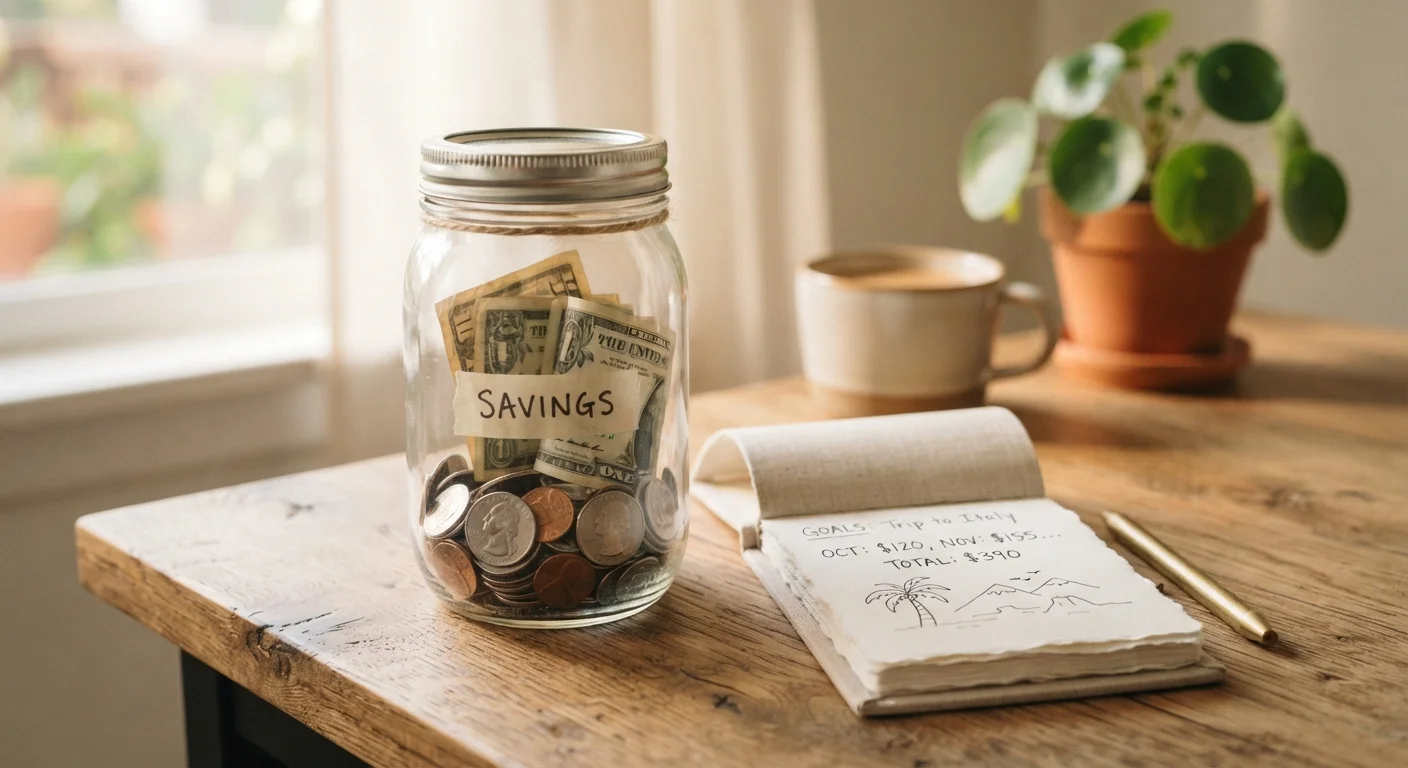
- Use it for the right goals. Savings accounts are well-suited for emergency funds (typically three to six months of expenses) and goals you plan to reach within a few years — a car down payment, a trip, or a security deposit.
- Understand the terminology. Terms like APY, compound interest, and rate tiers affect how your money grows. Interest Rates and APY explained breaks these down clearly.
$250,000
Federal deposit insurance limit per depositor
The FDIC insures deposits at member banks up to this amount per depositor, per institution, per ownership category — a key safety feature of savings accounts.
3–6 months
Recommended emergency fund coverage
Many personal finance educators suggest keeping three to six months of essential living expenses in an accessible savings account as a financial safety buffer.
If you find your balance isn't growing the way you expect, common reasons savings stalls covers the patterns most people don't notice until they look closely.
This article is for general informational and educational purposes only and does not constitute personalised financial advice. Consult a licensed financial professional for guidance specific to your situation.