
Why an Emergency Fund Matters Before Anything Else
Most financial setbacks don't come from poor planning — they come from the unexpected. A car that won't start, a medical bill that insurance doesn't fully cover, a few weeks of missed work. Without a financial cushion, these moments force people to reach for credit cards or loans, which often makes the situation more expensive over time.
An emergency fund breaks that cycle. It's not about being wealthy — it's about having a buffer that keeps one bad event from spiraling into a bigger financial problem. Think of it as the foundation everything else is built on. Even if you're just beginning to sort out your budgeting basics, starting an emergency fund in parallel is one of the most stabilizing things you can do.
This Is Education, Not Personal Advice
This article provides general financial education and is not personalised financial advice. Everyone's income, expenses, and circumstances differ. For guidance specific to your situation, consider speaking with a licensed financial professional.
What You'll Need to Get Started
Building an emergency fund doesn't require financial expertise or a large income — it requires a few practical inputs and a consistent habit. Here's what to have in place before you begin:
What you will need
Basic savings account
Holds your emergency fund separately from spending money so it's accessible but not tempting to dip into.
Monthly budget or spending tracker
Helps you identify how much you can realistically set aside each pay period.
Automatic transfer setup (via your bank's app or website)
Schedules recurring deposits to your savings account so saving happens without manual effort.
High-yield savings account (HYSA)
Earns more interest on your saved balance than a standard savings account, helping your fund grow slightly faster.
How to Build Your Emergency Fund Step by Step
Follow these steps in order. Each one builds on the last, and you can move at your own pace. The goal isn't speed — it's building a habit that holds.
Define what 'emergency' means for your situation
Before you open an account or move any money, decide what your fund is actually for. A financial emergency is an unexpected, necessary expense that would otherwise derail your finances — think a car breakdown, an urgent medical co-pay, or losing a job. It is not a vacation, a sale you don't want to miss, or a planned expense you forgot to budget for.
Writing this down — even as a note on your phone — helps you stay honest later when the temptation to dip into savings arises.
Set a realistic starter target
The standard long-term goal you'll often hear is three to six months of essential living expenses. That number can feel paralyzing when you're starting from zero, so ignore it for now. Your first milestone should be $500 to $1,000 — enough to handle a common, smaller emergency without going into debt.
Calculate your essential monthly expenses (rent or mortgage, utilities, groceries, transportation) to get a sense of what three months would eventually look like — but keep your immediate focus on that first $500 to $1,000 target.
Find the money in your existing budget
You don't need a raise to start saving — you need to locate room in your current income. Review your last 30 days of spending and look for any category where you could trim temporarily: subscription services you barely use, frequent takeout, impulse purchases. Even finding $30 to $50 per month is a meaningful start.
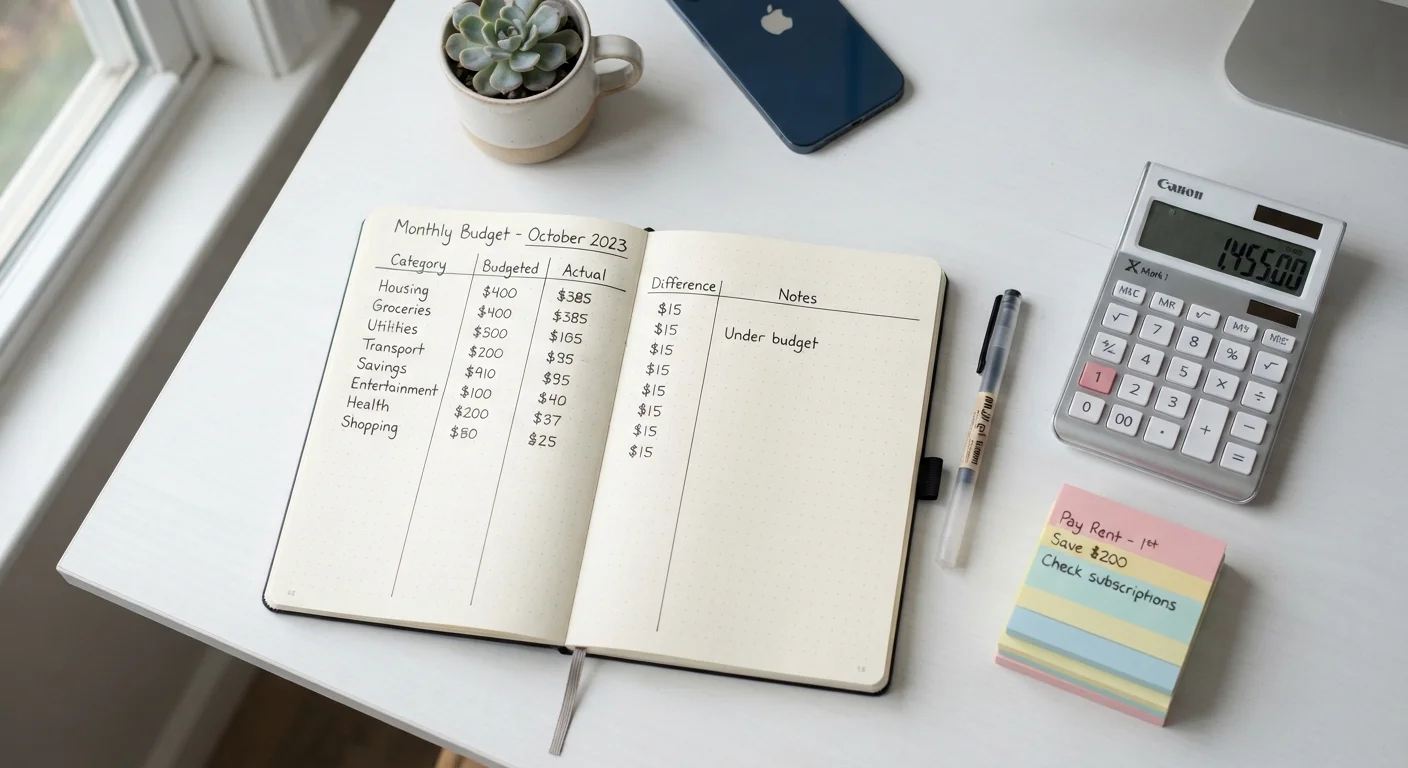
If you haven't built a budget yet, start there first. Our step-by-step budget walkthrough walks you through the process in plain language.
Open a dedicated savings account
Keeping your emergency fund in the same account as your spending money is the fastest way to accidentally use it. Open a separate savings account — ideally at a different institution or at least a sub-account you name 'Emergency Fund.' The small friction of transferring money creates a pause that helps you think twice before withdrawing.
Look for an account with no monthly maintenance fees and easy access (not locked away in a certificate of deposit you can't touch). Some people find that a high-yield savings account earns slightly more interest over time, which can help your balance grow while it sits.
Automate your contributions
Set up an automatic transfer from your checking account to your new savings account, timed to occur shortly after each payday. Even $15 or $25 per paycheck works. The key is consistency, not size. When saving happens automatically, you stop relying on willpower and simply adjust to the slightly lower available balance.
Boost your fund when windfalls arrive
Tax refunds, birthday money, overtime pay, or a small bonus are excellent opportunities to make a meaningful jump toward your target. Commit in advance to directing a portion — even half — of any unexpected money straight to your emergency fund before lifestyle spending absorbs it.
Once your starter fund is in place, you can balance other financial goals (paying down debt, saving for something fun like travel — see our travel fund guide for contrast) alongside growing your emergency cushion toward the three-to-six-month goal.
Let Automation Do the Heavy Lifting
Most banks let you schedule automatic transfers from checking to savings on a set date — often right after payday. Even transferring $20 automatically each pay period adds up to over $500 in a year. You're far more likely to save consistently when you don't have to make the decision each time.
Staying Consistent After the First Month
The most common problem isn't starting — it's continuing. After the initial motivation fades, life gets in the way. A few strategies help:
- Check your balance monthly, not daily. Watching small balances grow slowly can be discouraging; a monthly check-in shows more meaningful progress.
- Celebrate milestones. When you hit $250, acknowledge it. When you hit $500, acknowledge it again. Progress is real even when the number feels small.
- Rebuild immediately after use. If you do tap the fund for a genuine emergency, treat rebuilding it as your next priority. That's what it's there for.
Keeping your budget reliable is closely tied to making savings stick. If you find your plan unraveling, the article on why budgets fail in month two covers the most common patterns and how to course-correct. And as your financial habits strengthen, you'll be better positioned for longer-term goals — from building your credit history to eventually buying your first home.
Don't Treat Your Emergency Fund as Flexible Savings
An emergency fund is for genuine financial emergencies — unexpected medical bills, car repairs, or sudden job loss — not planned purchases or discretionary spending. Blurring this line is one of the most common reasons people drain their fund and feel stuck starting over.
This article is for general informational and educational purposes only and does not constitute personalised financial advice. For guidance tailored to your specific financial situation, consult a qualified financial professional.