

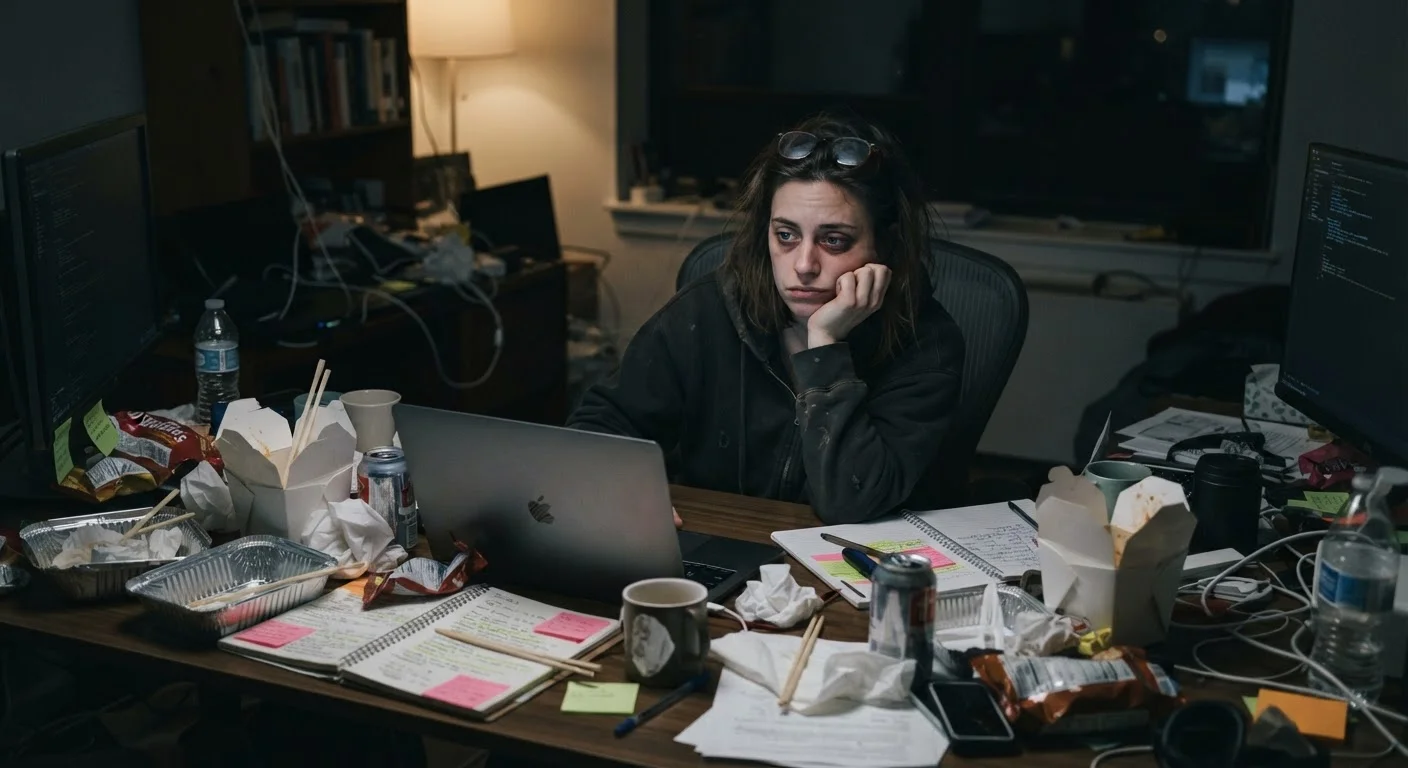
How Three Common Habits Create One Big Problem
Most young adults don't set out to neglect their health. The pattern usually sneaks up: a missed breakfast here, a late night scrolling there, a week where the gym never quite happened. Individually, each choice feels minor. Together, they form a feedback loop that drains energy, focus, and resilience over time.
Skipping meals, sleeping poorly, and moving too little are three of the most common health habit traps - and they tend to travel together. Low energy from poor sleep makes cooking feel impossible, so you skip meals. Irregular eating spikes and crashes your blood sugar, making it harder to sleep. A sedentary day leaves you restless at night. Rinse and repeat.
For a deeper foundation on how these habits fit together, this overview of daily health habits is a useful starting point. The goal of this article is simpler: name the specific mistakes, explain why they happen, and give you concrete ways to interrupt the cycle early.
Skipping breakfast or going long stretches without eating during the day.
Why it happens: Mornings are rushed, appetite feels low early in the day, or skipping meals is mistakenly seen as a shortcut to health goals. Many young adults also aren't taught that irregular eating affects energy and concentration.
Treating sleep as negotiable and consistently getting fewer than seven hours.
Why it happens: Late-night screen use, social schedules, academic or work pressure, and a cultural tendency to treat sleep deprivation as a badge of productivity all contribute. Sleep rarely feels urgent until it becomes a serious problem.
Sitting for most of the day with no structured movement or physical activity.
Why it happens: Remote learning, desk jobs, and the convenience of digital entertainment make sedentary days the default. Movement requires activation energy that's hard to summon when you're already depleted.
Relying on caffeine to compensate for poor sleep rather than addressing the root cause.
Why it happens: Caffeine is immediately effective and socially normalized. It feels like a solution when it's actually masking the underlying deficit - and late-day consumption can make the next night's sleep worse, perpetuating the cycle.
Treating 'resting' as scrolling through a phone or watching video, and wondering why you still feel tired.
Why it happens: Passive screen time feels restful because it requires no obvious effort - but it keeps the brain cognitively stimulated and can delay the mental wind-down your body needs. Many people confuse entertainment with genuine recovery.
What the Research Tells Us (Without Overstating It)
It's worth grounding these patterns in evidence - not to alarm, but to help you understand why they matter beyond just feeling sluggish.
1 in 3
Adults not getting enough sleep
According to the U.S. Centers for Disease Control and Prevention (CDC), about one in three American adults report regularly sleeping less than the recommended amount.
28%
Young adults meeting physical activity guidelines
The CDC reports that fewer than 3 in 10 adults in the U.S. meet both aerobic and muscle-strengthening physical activity guidelines.
~25%
Adults skipping breakfast regularly
Survey data from the NPD Group has estimated that roughly one in four Americans regularly skips breakfast, with rates generally higher among younger adults.
Sleep deprivation, for instance, is consistently linked in research to impaired concentration, mood disruption, and metabolic changes - though individual responses vary. Physical inactivity is recognized by public health organizations as a significant contributor to long-term health risk, even among young people. Irregular eating patterns can affect blood sugar regulation and energy levels, though the specific mechanisms differ person to person. For a plain-language explanation of one key mechanism, see why energy crashes after eating and what blood sugar has to do with it.
None of this means a few bad nights or skipped lunches will cause lasting harm. It means the pattern - sustained over weeks and months - is worth taking seriously, and that early, small corrections carry real value.
When Patterns Become More Than Habits
If you're experiencing persistent fatigue, significant changes in appetite, difficulty sleeping despite trying, or low mood that won't lift, these may be signs of an underlying health condition rather than just a habit issue. This article covers general lifestyle patterns - it is not a diagnostic tool. Please speak with a qualified healthcare provider if symptoms are affecting your daily life.
Building Your Way Out: Practical Starting Points
The instinct when recognizing bad habits is often to overhaul everything at once. That rarely works. Research on habit formation consistently points to small, stackable changes as more durable than dramatic overnight shifts. Understanding why new routines are hard to stick to can help you design a more forgiving approach from the start.
For sleep specifically, sleep affects nearly every other health goal you have - mood, metabolism, focus, and immunity included. Fixing sleep first often makes the other habits easier to establish. For nutrition, common beginner nutrition mistakes are worth reviewing so you don't replace one trap with another. And if your rest never feels truly restorative, rest and recovery are not the same thing - a distinction that matters more than most people realize.
Start with one habit. Pick the one causing the most friction in your life right now and make a single, small adjustment this week. Consistency compounds in both directions - which means even modest improvements build on themselves over time.
This article is for general informational and educational purposes only and is not a substitute for professional medical advice. Always consult a qualified healthcare provider before making significant changes to your diet, sleep routine, or physical activity level, especially if you have an existing health condition.