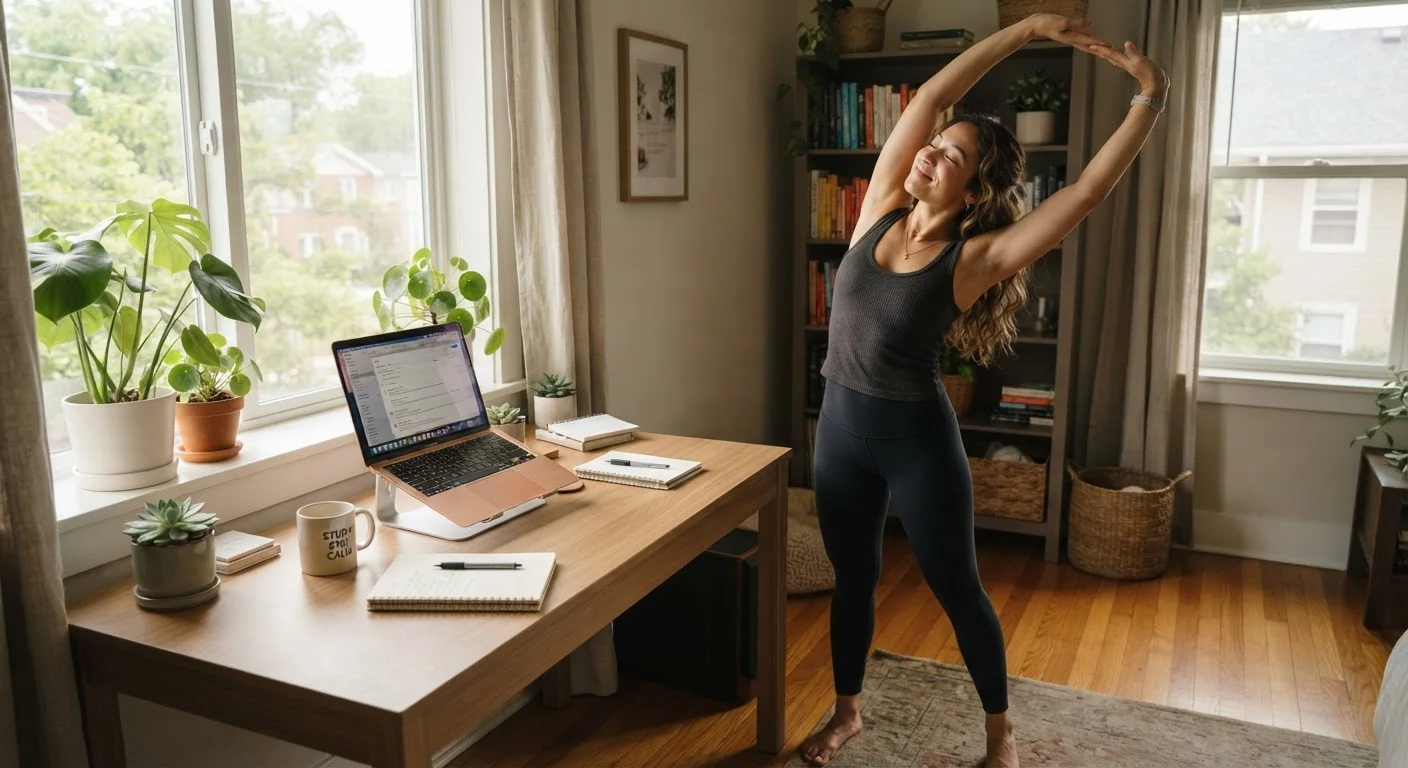


Why Daily Habits Shape Mental Health
Mental health isn't determined by a single breakthrough moment - it's largely shaped by what you do day after day. Research in psychology and behavioral science consistently shows that small, repeated behaviors influence mood, stress resilience, and emotional regulation more than most people expect.
This doesn't mean habits are a cure-all. If you're dealing with persistent symptoms like depression, anxiety, or emotional distress, speaking with a qualified mental health professional is the most important step you can take. For guidance on where to start, see our breakdown of therapy, counselling, and psychiatry.
That said, for the majority of young adults navigating everyday stress and emotional ups and downs, building a foundation of supportive daily habits is a meaningful and accessible place to begin. Here are the ones with genuine research backing them.
Move Your Body - Even Briefly
Physical activity is among the most robustly supported behavioral interventions for mental health. Studies published in journals including JAMA Psychiatry and The Lancet Psychiatry associate regular movement with reduced symptoms of depression and anxiety across diverse populations.
The mechanism isn't fully settled, but research points to several factors: exercise appears to reduce levels of stress hormones like cortisol, support the release of endorphins and brain-derived neurotrophic factor (BDNF - a protein that supports brain cell health), and improve sleep quality. You don't need an intense workout; even a 20-30 minute brisk walk has shown measurable mood effects in multiple studies. The key variable is consistency, not intensity.
Even a short daily walk has measurable mood effects - consistency matters more than intensity.
Prioritize Sleep as a Non-Negotiable
Sleep and mental health have a well-documented bidirectional relationship: poor sleep can worsen anxiety and mood, and poor mental health can disrupt sleep. The American Academy of Sleep Medicine recommends that adults aim for seven or more hours per night, though individual needs vary.
What's particularly relevant for young adults is that sleep deprivation impairs emotional regulation - making you more reactive to stressors and less able to apply reasoned responses. Practical steps that research supports include maintaining a consistent sleep and wake time (even on weekends), reducing bright screen exposure in the hour before bed, and keeping your sleeping environment cool and dark. Our companion article on sleep and mental health goes deeper into this cycle.
Sleep deprivation impairs emotional regulation, making everyday stressors harder to manage.
Spend Time in Natural Light and Outdoors
Sunlight exposure in the morning helps regulate your circadian rhythm - the internal body clock that governs sleep-wake cycles, hormone release, and mood. Research also suggests that time spent in natural environments (parks, green spaces, even tree-lined streets) is associated with lower perceived stress and improved mood, independent of physical activity.
A consistent morning habit of getting outside - even for ten to fifteen minutes - can support both your sleep quality later that night and your baseline mood during the day. For those in climates with limited winter daylight, this is especially worth being intentional about, and a doctor can advise on whether additional support strategies are appropriate.
Morning sunlight helps set your internal body clock, with downstream benefits for sleep and mood.
Invest in Social Connection
Loneliness has been described by researchers as a significant public health concern, with some studies linking chronic social isolation to outcomes comparable in magnitude to other recognized health risk factors. On the positive side, meaningful social contact - even brief, low-stakes interaction - is consistently associated with better emotional wellbeing and stress resilience.
This doesn't require an active social calendar. Research suggests that the quality of connection matters more than quantity. Checking in with a friend, having a real conversation (not just texting), or participating in a group activity you genuinely enjoy can all count. If you find yourself supporting someone else who's struggling, our article on talking to a friend who's struggling offers research-informed guidance.
Quality of social connection matters more than quantity - brief, genuine contact still makes a difference.
Practice a Simple Mindfulness or Breathing Exercise
Mindfulness - broadly defined as intentional, non-judgmental attention to the present moment - has accumulated a meaningful evidence base for reducing stress and supporting emotional regulation. Mindfulness-based programs have been studied in clinical settings, with meta-analyses suggesting modest but consistent effects on anxiety and depression symptoms in general populations.
For beginners, the barrier to entry is low. Even five minutes of focused breathing - such as slow exhales that are longer than your inhales - can activate the parasympathetic nervous system, which counteracts the stress response. Our articles on breathing techniques with research support and mindfulness vs. meditation explain the practical differences and how to start.
Five minutes of intentional breathing can measurably shift your body out of a stress state.
Limit Passive, Scrolling-Based Screen Time
Research on social media and mental health is still evolving and more nuanced than headlines often suggest - but there is a consistent pattern linking passive, comparison-driven social media use (scrolling without purpose) to lower mood and higher anxiety, particularly in young adults. Active use - messaging friends, creating content, participating in communities - shows weaker negative associations.
A practical approach is to set intentional limits on passive scrolling, particularly in the hour before bed and immediately upon waking, when you're most emotionally vulnerable. Our article on social media's effect on mood offers an honest look at what the evidence does and doesn't yet show.
Passive scrolling is more consistently linked to low mood than active, purposeful social media use.
Building These Habits Without Overwhelming Yourself
You don't need to adopt every habit on this list at once - in fact, trying to overhaul everything simultaneously often backfires. Research on behavior change suggests that starting with one or two habits and anchoring them to existing routines (like pairing a brief walk with your lunch break) leads to better long-term follow-through.
Start With Just One Habit
Behavior change research consistently shows that adding one habit at a time - rather than attempting a complete lifestyle overhaul - leads to better long-term results. Choose the habit that feels most manageable right now and practice it for two to four weeks before adding another. Small wins build momentum, and momentum builds lasting change.
If you're unsure where to begin structuring your day, our article on morning vs. evening routines explores how different times of day affect wellbeing differently. For a broader starting point, the Mental Wellness hub covers stress, mood, and emotional balance across a range of topics.
This article is for general informational and educational purposes only and is not a substitute for professional medical or mental health advice. Always consult a qualified healthcare provider about your individual circumstances.